Artistic Style
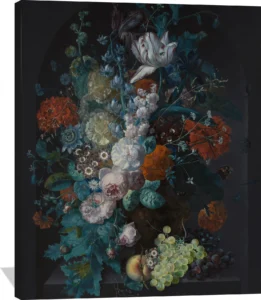
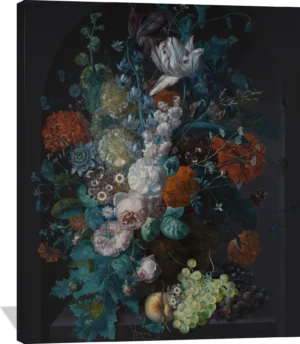
Haverman’s paintings are characterized by luminous color, meticulous detail, and a sophisticated balance of texture and light. Her arrangements reflect the height of Dutch Golden Age still-life traditions, yet her touch is unmistakably her own. She rendered petals, stems, insects, and glass surfaces with extraordinary precision, creating compositions that feel both opulent and naturalistic.
Notable Subjects
Her surviving works, including the renowned A Vase of Flowers, showcase elaborate bouquets featuring roses, tulips, peonies, and seasonal blooms arranged in ornate vessels. These compositions celebrate nature’s abundance while revealing her exceptional ability to depict delicate surfaces and botanical accuracy. Every element, from soft blossoms to reflective metals, demonstrates her careful observation and technical mastery.
Cultural and Historical Significance
Haverman holds a unique position in art history as one of the very few women admitted to the prestigious Académie Royale de Peinture et de Sculpture in Paris. Although her tenure there was brief, her acceptance alone attests to the recognition of her talent among leading artists of the time. Her work embodies the height of Dutch still-life painting while offering a rare perspective from a woman working within an elite artistic circle.
Legacy
While only a handful of her paintings are known today, each stands as a testament to her refined expertise and the enduring appeal of Dutch floral still lifes. Haverman’s art continues to captivate contemporary audiences for its exquisite craftsmanship and its expression of artistic precision paired with natural elegance.