Artistic Style
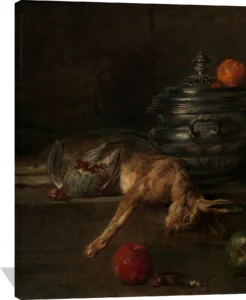
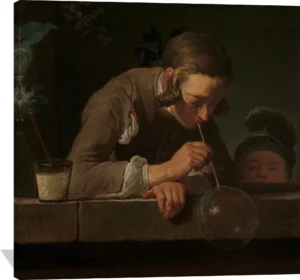
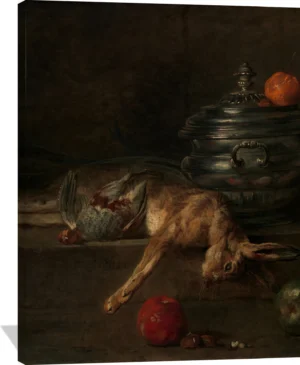
Chardin’s style is defined by subtle harmonies, softened contours, and a remarkable command of light. Rather than relying on dramatic flourishes, he focused on the material truth of objects, rendering surfaces, textures, and volumes with meticulous care. His deliberate approach and muted palette gave his paintings an intimate, contemplative character that set him apart from the ornate tendencies of the Rococo era.
Subjects and Themes
Best known for still lifes, Chardin elevated humble subjects such as fruit, kitchenware, and simple household items into poetic compositions. His genre scenes often portrayed domestic life with warmth and sincerity, capturing figures in moments of quiet concentration. Works like The Ray and Boy with a Spinning Top exemplify his gift for imbuing ordinary life with quiet dignity and emotional depth.
Legacy and Significance
Chardin’s influence endures through his ability to highlight the beauty of the commonplace. His paintings celebrate simplicity and craftsmanship, establishing him as a master of atmosphere and a pioneer of modern still-life painting. Revered for his devotion to truth and clarity, he remains a central figure in French art and a touchstone for artists who value precision, restraint, and the expressive power of the everyday.