Artistic Style
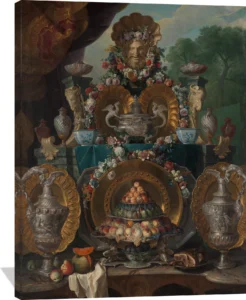
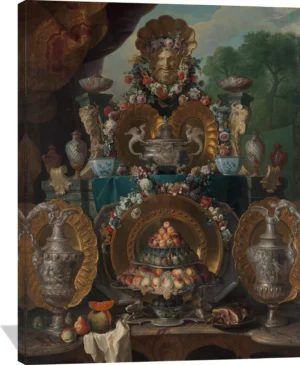
Desportes’s work is characterized by its meticulous detail, luminous palette, and harmonious balance between naturalism and courtly sophistication. His brushwork captures the textures of fur, feathers, and foliage with remarkable clarity, while his compositions often integrate lavish hunting trophies, floral arrangements, and carefully observed wildlife. This combination of realism and decorative refinement helped shape a distinctly French interpretation of still-life and animal painting.
Notable Contributions
Known for serving the royal court, Desportes created celebrated works for Louis XIV and Louis XV, helping to elevate animal and hunting scenes within the hierarchy of French art. He contributed significantly to the development of the French school of naturalistic painting through his studies of exotic animals, many of which he observed firsthand in royal menageries. His paintings often served as references for tapestry designers, further extending his influence across the applied arts.
Typical Subjects
His compositions frequently feature hunting dogs, game animals, and richly arranged still-life elements, often accompanied by evocative landscape settings. Works such as Still Life with Dead Game and Dog Guarding Dead Game exemplify his ability to infuse traditional hunting imagery with emotional resonance and visual grandeur. The sense of immediacy and presence in his animal subjects remains one of his most distinctive hallmarks.
Cultural Significance
Desportes stands as a pivotal figure in early eighteenth‑century French painting, instrumental in shaping the aesthetic language of naturalism at the royal court. His legacy endures through the meticulous observational approach he brought to the genre and the lasting influence his compositions had on later artists. Today, his work is admired for its blend of scientific precision and artistic elegance, a testament to his role as a master of French animal painting and an innovator in the decorative arts.