
Study of a Nude Man
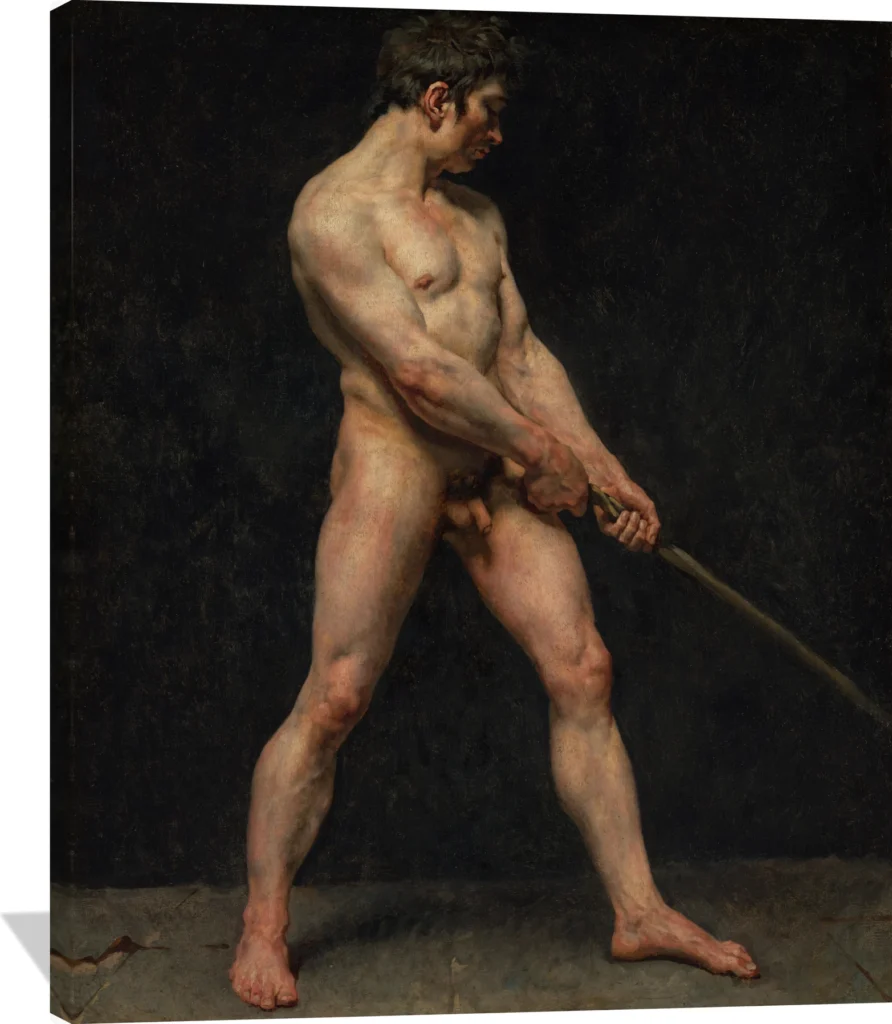
The Pierre Narcisse Guérin Study of a Nude Man canvas captures the timeless strength and grace of the human form through masterful realism. Rendered in warm flesh tones against a deep, shadowed background, this striking composition highlights the artist’s early 19th-century French precision and sensitivity to light and anatomy.
This museum-quality canvas print brings a sense of classical refinement to any space. Its bold yet contemplative mood makes it ideal for a study, living room, or gallery-style entryway, offering an elegant focal point that celebrates the enduring beauty of academic art.
Pierre Narcisse Guérin was a leading French painter of the early nineteenth century, celebrated for his refined approach to Neoclassicism and his influence on the emerging Romantic generation. Known for his command of dramatic lighting, elegant contours, and emotionally resonant narratives, Guérin held an important place in the artistic transition between the eighteenth and nineteenth centuries.
Artistic Style
Guérin’s work is distinguished by its polished Neoclassical structure, enriched by a growing sensitivity to atmosphere and mood. His paintings often balance clarity of form with heightened emotional expression, a synthesis that made him a vital bridge between strict academic ideals and the more expressive tendencies that followed. His use of composed staging and controlled light brought a sense of theatrical intensity that became a hallmark of his style.
Subjects and Themes
He frequently depicted subjects drawn from classical mythology, ancient history, and literary drama. These scenes allowed him to explore moral tension, heroic resolve, and the human capacity for passion. Guérin’s most recognized works, including Marcus Sextus and Aeneas Relating to Dido the Disasters of Troy, highlight his ability to merge narrative depth with visual clarity.
Legacy and Significance
As director of the French Academy in Rome, Guérin played a central role in shaping the next generation of French painters, leaving a lasting mark on artists such as Eugène Delacroix and Théodore Géricault. His commitment to elevating historical painting, along with his refined craftsmanship, secured his position as a pivotal figure in the evolution of nineteenth‑century French art.
Today, Guérin’s work is valued for its elegance, emotional resonance, and its place within the broader story of European painting. His canvases continue to exemplify the sophistication and disciplined beauty that define the height of French Neoclassicism, while also signaling the emergence of a more expressive, Romantic vision.
Trust & policies
- 🚚 Free tracked shipping to 45+ countries. Local import duties or taxes may apply in some destinations.
- 🎨 Made-to-order, printed close to your delivery location
- 🛡️ If damaged, defective, or misprinted: free replacement or refund
- 🌍 Printed in US/CA/EU/UK/AU based on delivery location
- 💎 Acid-free, fade-resistant canvas with solid wood stretcher bars
- 🖼️ Optional pine floating frames in white, black, or brown
- 🪝 Ready to hang — hardware pre-installed