
Still Life with Cake
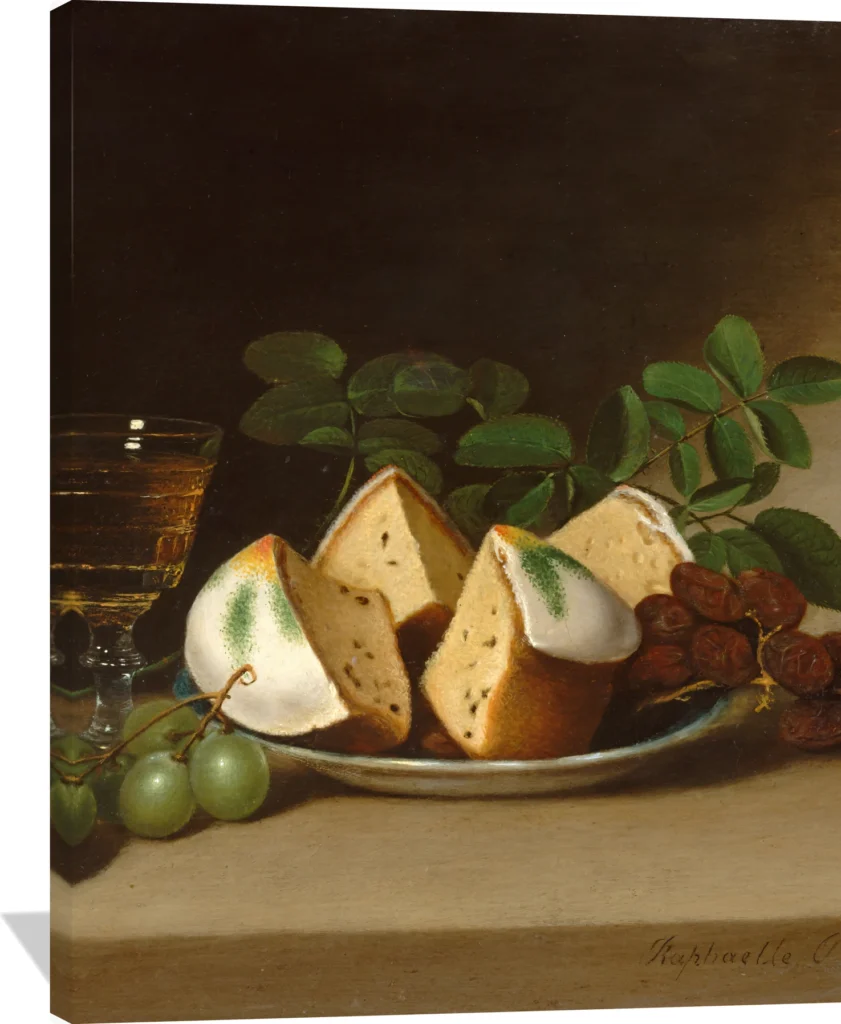
The Raphaelle Peale Still Life with Cake canvas captures a moment of quiet indulgence with luminous realism. A golden glass of wine, sugared cakes, and clusters of grapes rest on a simple table, their textures rendered with exquisite precision. Warm tones of amber, cream, and green emerge from a soft brown background, creating a timeless sense of balance and calm.
This elegant canvas print brings refined still-life beauty to any space—perfect for a dining room, study, or entryway. Peale’s masterful composition and subtle light evoke both simplicity and sophistication, making this wall art a serene focal point for classic or contemporary interiors.
Raphaelle Peale (1774–1825) stands as one of early America’s most accomplished still‑life painters, admired for his meticulous technique and quietly poetic approach to everyday objects.
Artistic Style
Peale is best known for refined still-life compositions that emphasize clarity, balance, and tactile realism. His paintings reveal a precise sense of observation, often featuring luminous surfaces, subtle shadows, and the delicate interplay between light and texture. Through measured restraint and intimate scale, he helped establish the still life as a respected art form in the United States.
Notable Contributions
As a member of the influential Peale family of artists, Raphaelle distinguished himself through his focus on modest subjects rather than grand historical scenes. He became one of the first American painters to specialize almost exclusively in still life, elevating the genre with a level of sophistication previously associated with European masters. His works frequently display a thoughtful arrangement of fruit, glassware, and household items, composed with a subtle drama that reveals his exceptional sensitivity to detail.
Typical Subjects
Peale’s favored motifs include ripe fruit, cut flowers, wine glasses, and kitchen objects arranged with deliberate simplicity. Many of his compositions, such as Still Life with Strawberries or Still Life with Wine Glass, showcase the careful rendering of surface textures and reflective materials. The stillness and immediacy of these objects contribute to the meditative quality that defines his work.
Cultural and Historical Significance
Working during the early American Republic, Peale brought a refined, almost scientific attentiveness to subjects drawn from daily life. His close association with the Peale family’s intellectual pursuits influenced his precise visual language and his interest in observation as a pathway to understanding. Today, Raphaelle Peale is recognized as a foundational figure in American still‑life painting, admired for the quiet elegance and enduring clarity of his vision.
Trust & policies
- 🚚 Free tracked shipping to 45+ countries. Local import duties or taxes may apply in some destinations.
- 🎨 Made-to-order, printed close to your delivery location
- 🛡️ If damaged, defective, or misprinted: free replacement or refund
- 🌍 Printed in US/CA/EU/UK/AU based on delivery location
- 💎 Acid-free, fade-resistant canvas with solid wood stretcher bars
- 🖼️ Optional pine floating frames in white, black, or brown
- 🪝 Ready to hang — hardware pre-installed