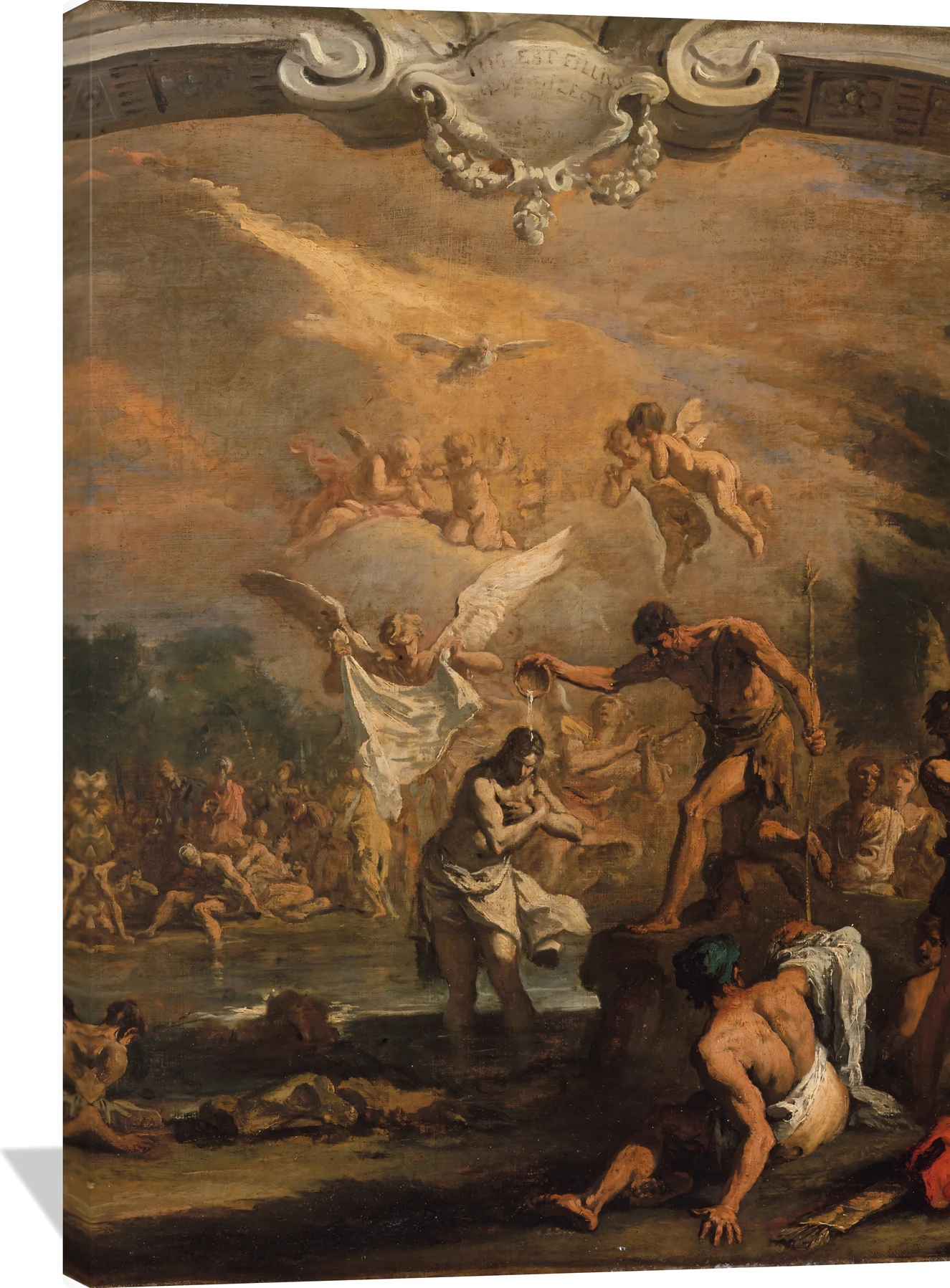
The Sebastiano Ricci The Baptism of Christ canvas captures a luminous moment of divine revelation, rendered in warm earth tones, golden light, and soft sky blues. Ricci’s masterful brushwork brings vitality to the sacred scene, where celestial figures and flowing drapery merge in a radiant composition that glows with spiritual energy.
This Baroque-inspired canvas print infuses any space—whether a living room, study, or entryway—with a sense of reverence and grandeur. A timeless work by the Italian painter Sebastiano Ricci (Belluno 1659–1734 Venice), it offers both historical depth and visual warmth, making it a striking centerpiece for refined interiors.
Sebastiano Ricci (Italian, Belluno 1659–1734 Venice) was a pivotal figure of the late Baroque, celebrated for his luminous color, fluid brushwork, and spirited compositions that helped usher Venetian painting into a new era of elegance and vitality.
Artistic Style
Ricci’s style blends the grandeur of the Baroque with a refined lightness that anticipates the Rococo. His paintings are distinguished by vibrant palettes, graceful movement, and a confident, expressive touch. He often employed atmospheric luminosity and dynamic figure arrangements, creating scenes that feel both theatrical and effortlessly natural.
Subjects and Themes
Throughout his career, Ricci explored religious narratives, mythological episodes, and allegorical themes. Whether depicting saints, deities, or historical figures, he infused his compositions with warmth and emotional immediacy. His treatment of classical subjects balanced dramatic storytelling with visual harmony, making his work appealing to both ecclesiastical and aristocratic patrons.
Legacy and Significance
Ricci played a crucial role in revitalizing Venetian painting in the early eighteenth century. His international commissions helped disseminate the Venetian tradition abroad, influencing artists across Europe. As a precursor to the Rococo, he contributed to a stylistic shift marked by elegance, coloristic brilliance, and a renewed interest in decorative charm. Today he is remembered as a master whose work bridged the opulence of the Baroque with the emerging sensibilities of a lighter, more playful age, leaving a lasting impact on the development of European art.