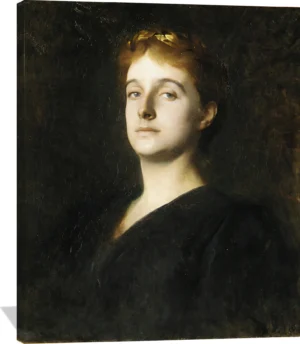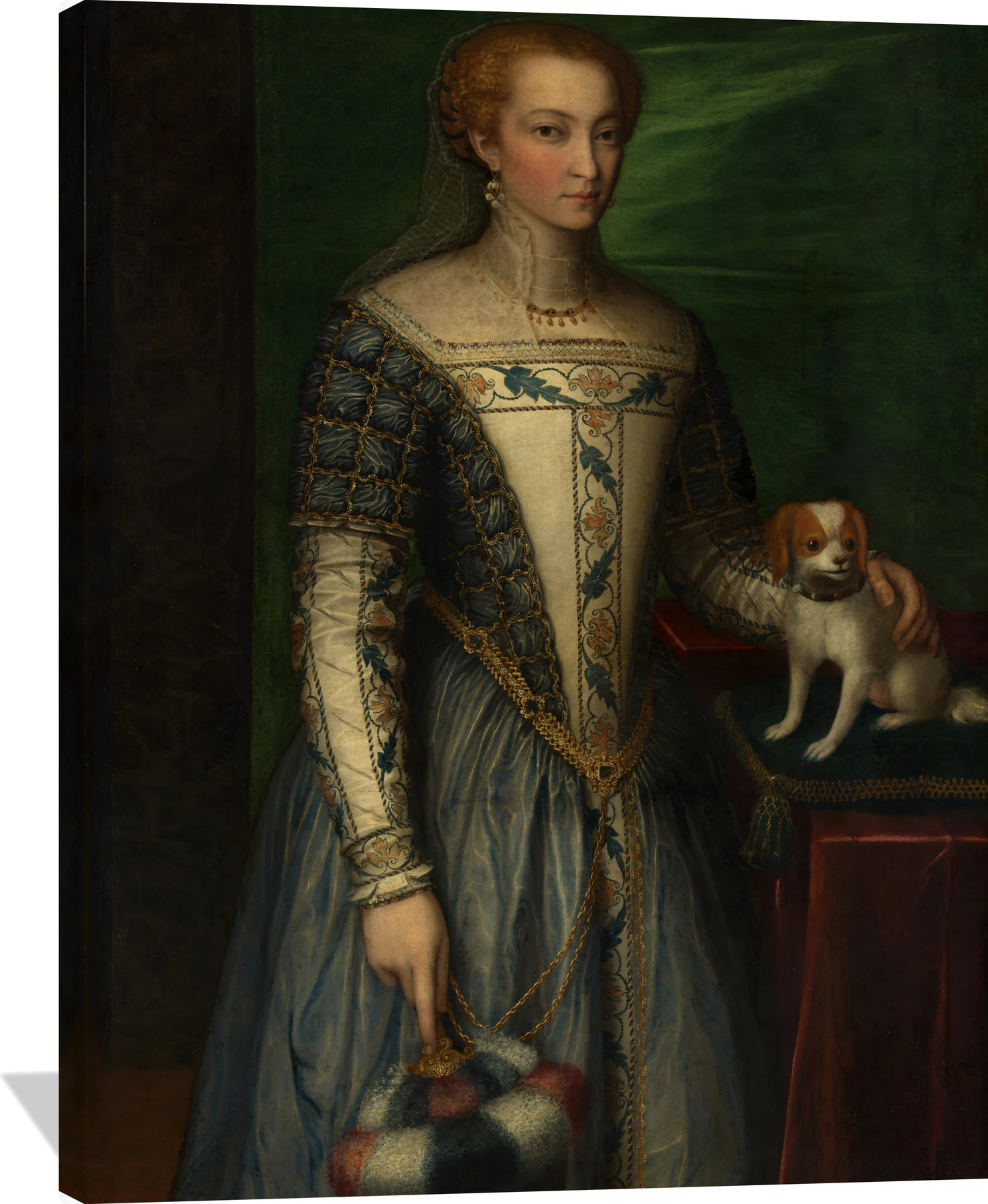
The Bernardino Campi Portrait of a Woman canvas captures Renaissance elegance with exquisite detail and poise. The sitter, dressed in a richly embroidered gown of ivory, blue, and gold, stands against a deep green backdrop, her calm gaze complemented by the gentle presence of a small dog. Campi’s refined brushwork and mastery of light evoke a sense of quiet nobility and timeless grace.
This premium canvas print brings classical sophistication to any setting—ideal for a living room, study, or entryway. The Portrait of a Woman wall art invites contemplation and adds a touch of Italian Renaissance grandeur to modern interiors.
Bernardino Campi (1522–1591), an Italian painter from Cremona who later worked extensively in Reggio Emilia, was a distinguished figure of the late Renaissance. Trained within the Lombard tradition yet receptive to the evolving Mannerist aesthetic, he developed a refined visual language that balanced naturalistic detail with elegant stylization.
Artistic Style
Campi’s work is recognized for its harmonious composition, polished draftsmanship, and nuanced use of color. His paintings often feature graceful figures rendered with gentle modeling and a poised, almost theatrical sense of presence. Drawing on influences from Correggio and the Cremonese school, he cultivated a personal style marked by clarity, warmth, and distinctive emotional subtlety.
Subjects and Themes
He specialized in religious imagery, particularly altarpieces and devotional scenes that conveyed serene spirituality. Campi’s portraits, another significant part of his oeuvre, reveal his ability to capture both likeness and character with sophistication. These works, whether sacred compositions or depictions of prominent patrons, demonstrate his command of gesture, expression, and atmospheric depth.
Legacy and Significance
As a central figure in the artistic culture of Cremona, Campi influenced a generation of painters, including members of his own prominent artistic family. His contributions helped bridge the transition from High Renaissance balance to the more refined Mannerist sensibility that shaped northern Italy in the sixteenth century. Today, his paintings are valued for their craftsmanship, their lyrical elegance, and their role in defining the visual identity of his region during a period of cultural flourishing.