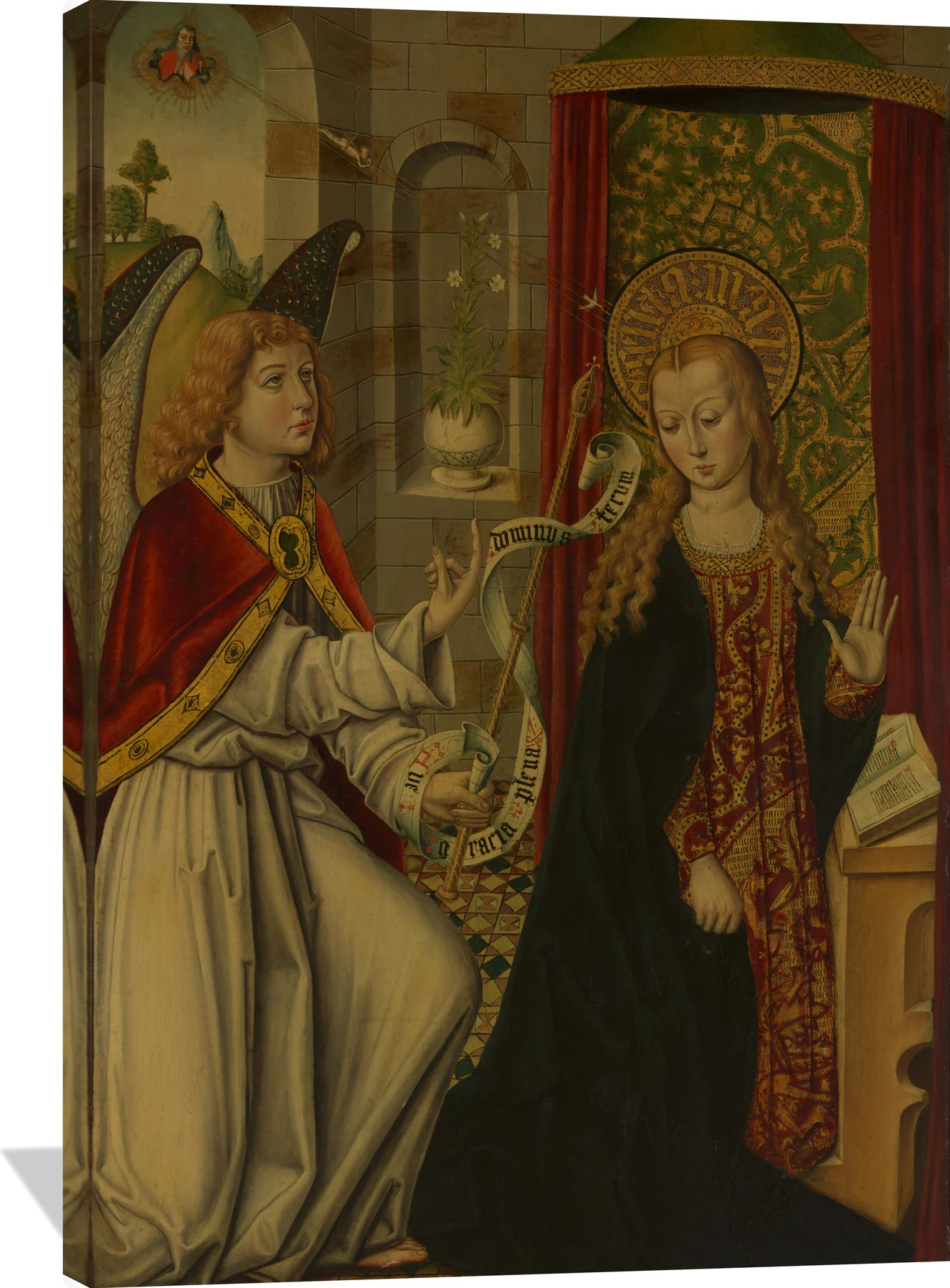
The Budapest Master The Annunciation canvas captures a moment of divine serenity and luminous color. Rendered in warm golds, deep reds, and soft greens, this early Castilian masterpiece radiates spiritual grace through its intricate details and balanced composition. The angel’s reverent gesture and the Virgin’s calm poise evoke a timeless sense of devotion and peace.
This museum-quality The Annunciation canvas print brings Renaissance elegance into any setting—perfect for a living room, study, or entryway. Its rich tones and sacred symbolism invite quiet reflection while adding a refined, historical touch to your wall art collection.
The Budapest Master is the accepted name for an anonymous Castilian painter active around 1500, recognized for a compelling fusion of late Gothic refinement and emerging Renaissance naturalism. His surviving works demonstrate a sophisticated command of narrative clarity, devotional intensity, and subtle atmospheric detail, marking him as a distinctive figure within Spain’s transition toward early modern art.
Artistic Style
The Budapest Master’s style reflects the elegant linearity and expressive proportions characteristic of the late Gothic tradition, enriched by the growing influence of Italianate realism. Figures are rendered with delicate modeling, luminous color harmonies, and a strong sense of psychological presence. Complex drapery, graceful gestures, and carefully structured spatial settings reveal a painter deeply attuned to visual drama and devotional resonance.
Subjects and Themes
His oeuvre centers on religious narrative, with scenes that highlight the emotional depth and spiritual intimacy valued in Castilian artistic culture at the turn of the sixteenth century. Sacred figures are depicted with an emphasis on human tenderness and contemplative solemnity, making his panels especially prized for their ability to balance theological symbolism with perceptive human detail.
Historical and Cultural Significance
Active during a pivotal moment in Spanish art, the Budapest Master stands at the crossroads of medieval tradition and Renaissance innovation. His work offers valuable insight into the artistic climate of Castile, where international Gothic influences merged with new approaches to form, perspective, and natural observation. Though his identity remains unknown, his panels are regarded as representative of a broader cultural shift toward heightened realism and emotional engagement.
Enduring Appeal
Collectors and historians value the Budapest Master for his refined craftsmanship and his ability to evoke profound spiritual atmosphere with compositional clarity and visual elegance. His paintings continue to embody the artistic vitality of early sixteenth‑century Spain, preserving the aesthetic transition of an era while maintaining a timeless expressive power.