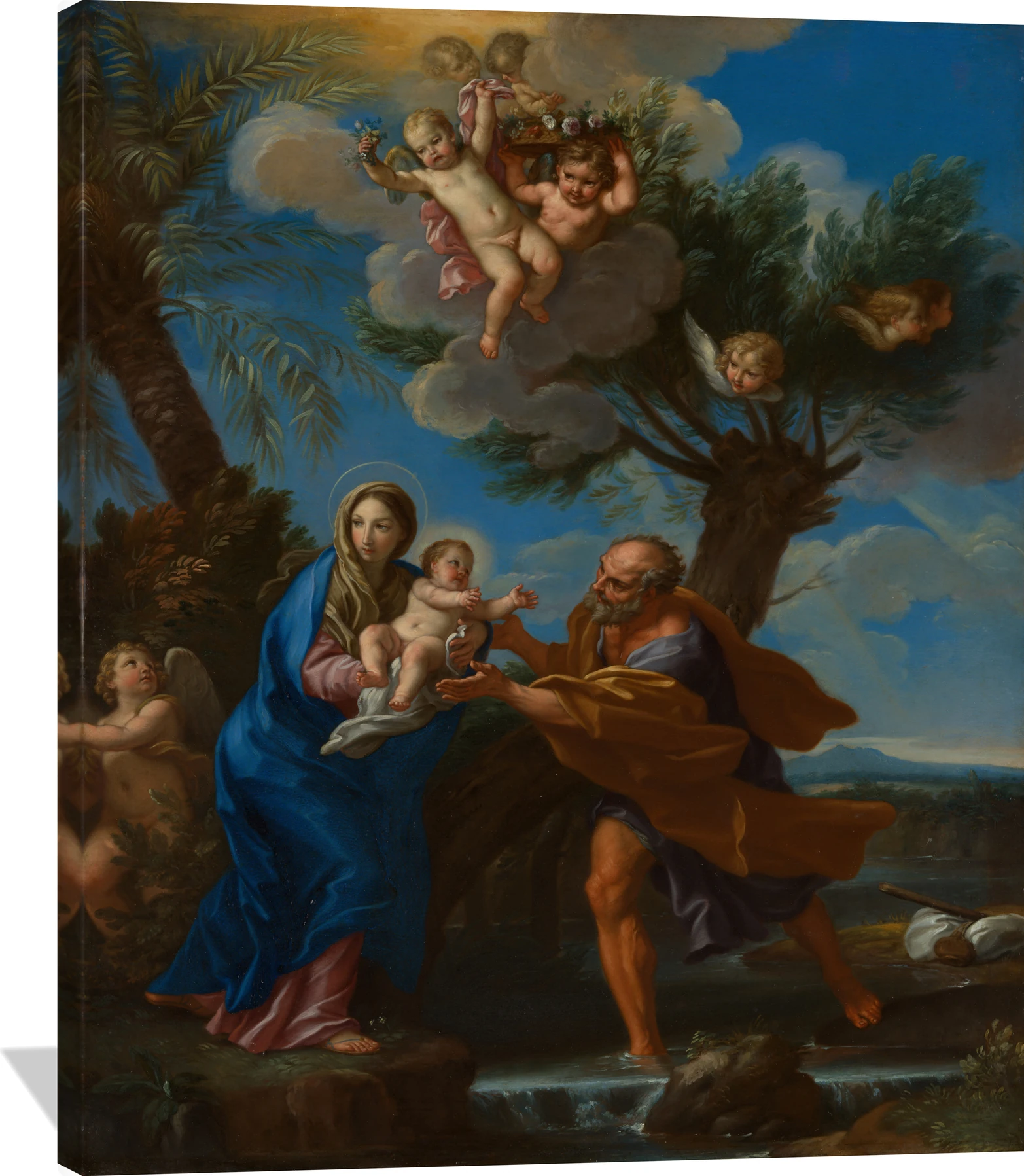
The Carlo Maratti The Flight into Egypt canvas captures a serene moment of divine protection and tender humanity. Bathed in luminous tones of azure blue, warm gold, and soft rose, this Baroque masterpiece radiates grace and movement. The figures are enveloped in a celestial glow, framed by sweeping clouds and gentle landscape details that evoke peace and devotion.
This exquisite The Flight into Egypt canvas print brings timeless Italian artistry to your space. Perfect for a living room, study, or entryway, it adds an aura of classical beauty and spiritual calm to any wall. A refined choice for collectors and admirers of sacred art alike.
Carlo Maratti (Italian, Camerano 1625–1713 Rome) was one of the most influential painters of the late Roman Baroque, admired for uniting classical harmony with the emotional richness of his era. His long and celebrated career positioned him as the leading artistic figure in Rome during the late seventeenth century, where he refined a style rooted in Raphael’s ideals while embracing the grandeur and warmth characteristic of Baroque painting.
Artistic Style
Maratti’s work is distinguished by its graceful compositions, luminous coloration, and serene, balanced forms. Favoring clarity over dramatic excess, he cultivated a polished aesthetic that blended classical restraint with gentle expressiveness. His figures often embody a poised elegance, revealing his deep study of Renaissance masters and his commitment to a refined, elevated visual language.
Subjects and Themes
Best known for his religious paintings, Maratti produced altarpieces, devotional scenes, and imaginatively rendered interpretations of sacred narratives. Madonnas, saints, and episodes from the life of Christ feature prominently in his oeuvre, presented with a tenderness and compositional order that made his works widely sought after. He also created portraits of Rome’s elite, capturing sitters with dignified naturalism and subtle psychological insight.
Legacy and Significance
A central figure in Roman artistic life, Maratti led the city’s premier studio and guided a generation of painters who carried forward his refined approach. As the last great master of the classical Baroque tradition, he helped shape a transition toward the more measured aesthetics of the eighteenth century. His paintings remain celebrated for their harmonious clarity and enduring beauty, securing his place as one of the period’s most important artists.