Artistic Style
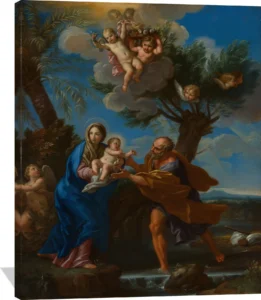
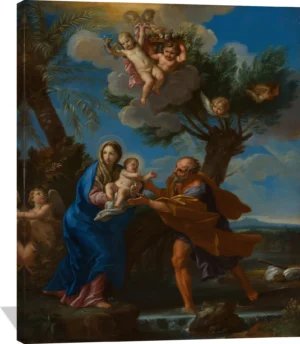
Maratti’s work is distinguished by its graceful compositions, luminous coloration, and serene, balanced forms. Favoring clarity over dramatic excess, he cultivated a polished aesthetic that blended classical restraint with gentle expressiveness. His figures often embody a poised elegance, revealing his deep study of Renaissance masters and his commitment to a refined, elevated visual language.
Subjects and Themes
Best known for his religious paintings, Maratti produced altarpieces, devotional scenes, and imaginatively rendered interpretations of sacred narratives. Madonnas, saints, and episodes from the life of Christ feature prominently in his oeuvre, presented with a tenderness and compositional order that made his works widely sought after. He also created portraits of Rome’s elite, capturing sitters with dignified naturalism and subtle psychological insight.
Legacy and Significance
A central figure in Roman artistic life, Maratti led the city’s premier studio and guided a generation of painters who carried forward his refined approach. As the last great master of the classical Baroque tradition, he helped shape a transition toward the more measured aesthetics of the eighteenth century. His paintings remain celebrated for their harmonious clarity and enduring beauty, securing his place as one of the period’s most important artists.