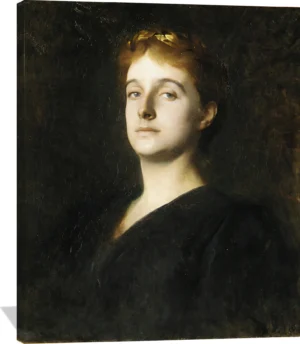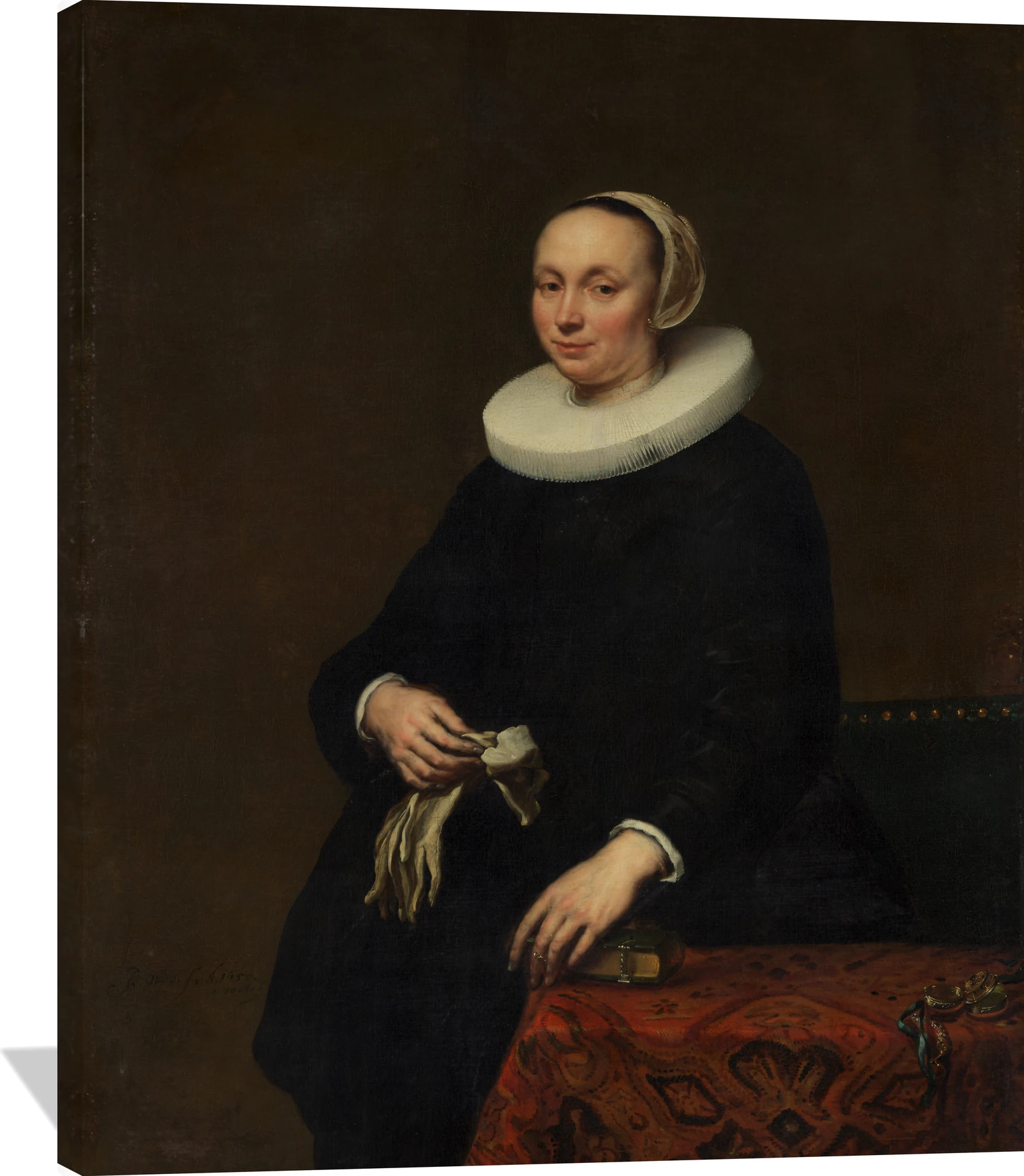
The Jürgen Ovens Portrait of a Woman canvas captures timeless elegance through masterful use of light and shadow. The sitter’s calm expression, framed by a crisp white ruff and soft neutral tones, stands out against a deep brown background and richly patterned red tablecloth. This classic composition evokes quiet dignity and refined grace.
Perfect for a living room, study, or entryway, this museum-quality canvas print brings the sophistication of 17th-century portraiture into a modern space. Let this exquisite Portrait of a Woman wall art add warmth, depth, and historical charm to your décor.
Jürgen Ovens (1623–1678) was a German-born painter from Tönning who built a distinguished career in the cultural crossroads of 17th‑century Northern Europe. Active primarily in Friedrichstadt and the Dutch artistic milieu, he became known for his refined portraiture and vivid historical scenes that reflect the influence of major Dutch masters while maintaining his own expressive clarity.
Artistic Style
Ovens worked in the tradition of the Dutch Golden Age, blending naturalistic detail with a warm, humanistic sensibility. His portraits are marked by attentive characterization, atmospheric lighting, and a subtle tonal range that reveals close study of Rembrandt’s circle. He often combined smooth, confident brushwork with a restrained palette, giving his compositions an understated yet powerful presence.
Subjects and Themes
Portraits formed the core of Ovens’s practice, particularly depictions of civic leaders, scholars, and members of the regional elite. He also produced altarpieces and large-scale historical narratives, capturing dramatic biblical or mythological moments with a measured sense of realism. Whether portraying a prominent individual or a complex narrative scene, he emphasized psychological depth and a strong sense of lived experience.
Legacy and Significance
Ovens played a crucial role in bridging German and Dutch artistic cultures during a period of flourishing exchange. His work is valued today for its refined technique, cultural insight, and its position within the broader development of Northern European Baroque painting. As an accomplished portraitist and skilled interpreter of grand themes, he remains recognized for his distinctive blend of Dutch influence and personal artistic voice.