Artistic Style
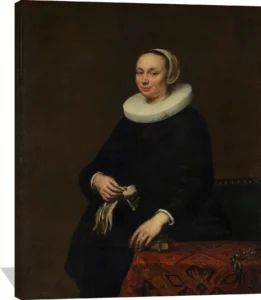
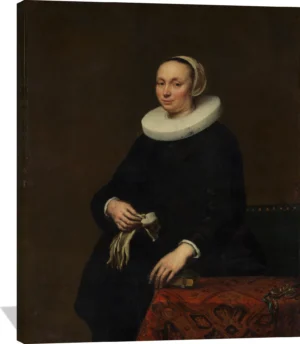
Ovens worked in the tradition of the Dutch Golden Age, blending naturalistic detail with a warm, humanistic sensibility. His portraits are marked by attentive characterization, atmospheric lighting, and a subtle tonal range that reveals close study of Rembrandt’s circle. He often combined smooth, confident brushwork with a restrained palette, giving his compositions an understated yet powerful presence.
Subjects and Themes
Portraits formed the core of Ovens’s practice, particularly depictions of civic leaders, scholars, and members of the regional elite. He also produced altarpieces and large-scale historical narratives, capturing dramatic biblical or mythological moments with a measured sense of realism. Whether portraying a prominent individual or a complex narrative scene, he emphasized psychological depth and a strong sense of lived experience.
Legacy and Significance
Ovens played a crucial role in bridging German and Dutch artistic cultures during a period of flourishing exchange. His work is valued today for its refined technique, cultural insight, and its position within the broader development of Northern European Baroque painting. As an accomplished portraitist and skilled interpreter of grand themes, he remains recognized for his distinctive blend of Dutch influence and personal artistic voice.