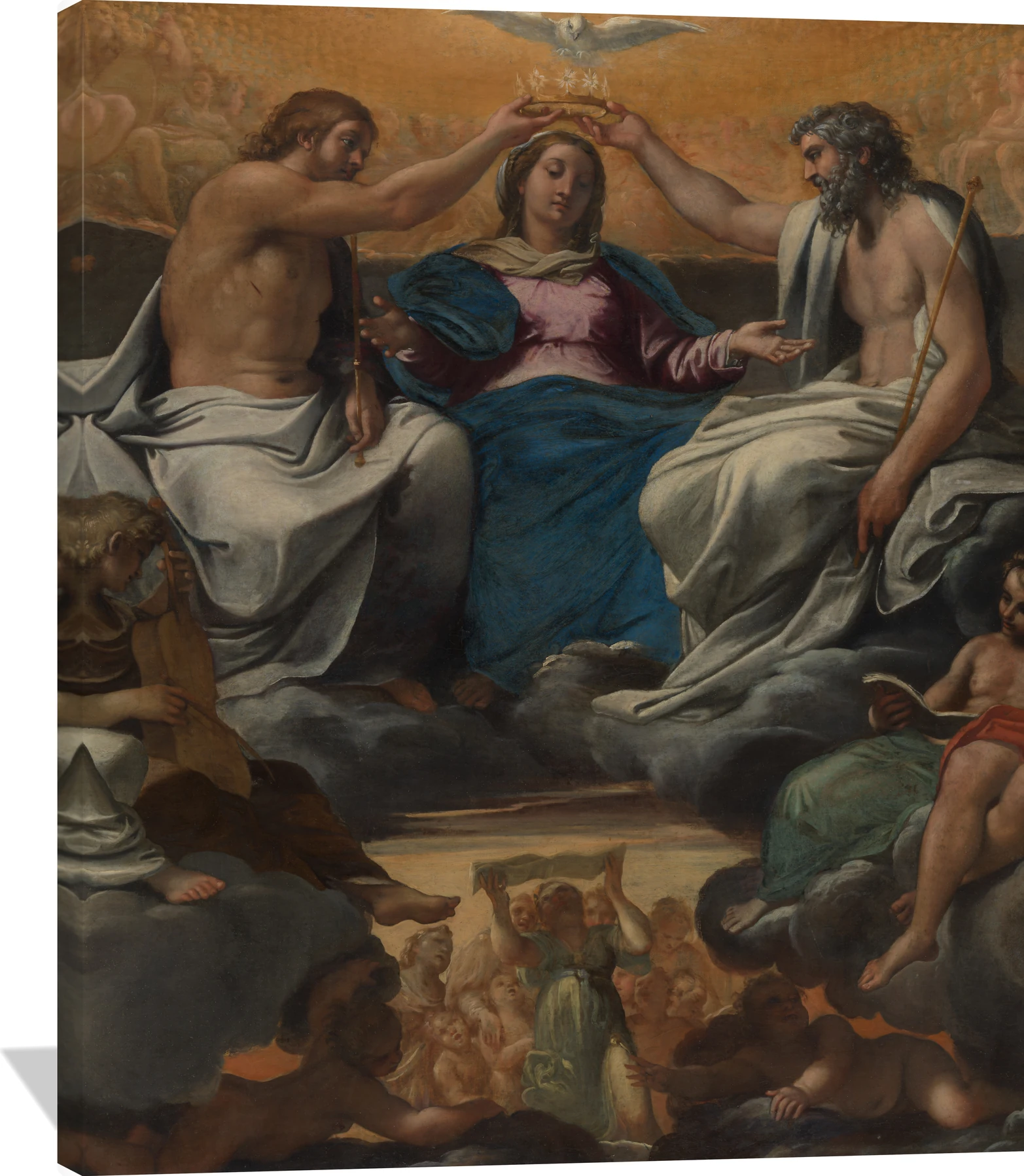
The Annibale Carracci The Coronation of the Virgin canvas captures a luminous vision of divine grace and harmony. Bathed in radiant golds, deep blues, and soft ivory tones, Carracci’s masterful composition unites heaven and earth in a moment of transcendent serenity. The balanced figures and gentle light evoke a timeless sense of reverence and beauty.
This exquisite canvas print brings classical grandeur to any interior. Ideal for a living room, study, or entryway, it infuses your space with the spiritual depth and refined artistry of the Italian Baroque. A striking piece of wall art that celebrates both faith and the enduring power of Renaissance-inspired elegance.
Annibale Carracci (Italian, Bologna 1560–1609 Rome) was a pioneering force in the transformation of late Renaissance painting, celebrated for his harmonious blend of naturalism and classical balance. His work helped shape the visual language that would define the Baroque era, making him one of the most influential artists of his generation.
Artistic Style and Vision
Carracci pursued a revitalization of painting rooted in close observation of nature while embracing the clarity and idealized beauty of the High Renaissance. This dual commitment forged a style marked by luminous color, graceful composition, and expressive yet controlled emotional depth. His ability to merge realism with classical poise became a cornerstone of his artistic identity and set a new standard for European art.
Notable Contributions
As a founder of the Carracci Academy in Bologna, he played a crucial role in reintroducing rigorous drawing, life study, and a thoughtful engagement with classical art. His fresco cycle in the Palazzo Farnese in Rome, often cited as one of the greatest decorative programs of the period, demonstrated his mastery of narrative, anatomy, and visual rhythm. Through such achievements, he helped establish the foundations of the emerging Baroque movement, influencing generations of painters across Italy and beyond.
Subjects and Themes
Carracci’s work ranges from deeply affecting religious compositions to pastoral landscapes and mythological scenes imbued with warmth and humanity. Whether portraying sacred figures, allegorical subjects, or everyday life, he approached each with a refined sensitivity to gesture, light, and spatial harmony. Even his humorous genre scenes reveal his commitment to understanding the human condition.
Cultural Significance
Recognized as a central figure in the evolution of Western art, Carracci’s legacy lies in his ability to reconcile innovation with tradition. His synthesis of natural truth and classical ideals shaped the course of seventeenth-century painting and remains a touchstone for artists and scholars. Collectors value his work for its beauty, technical excellence, and its pivotal role in the development of Baroque classicism.