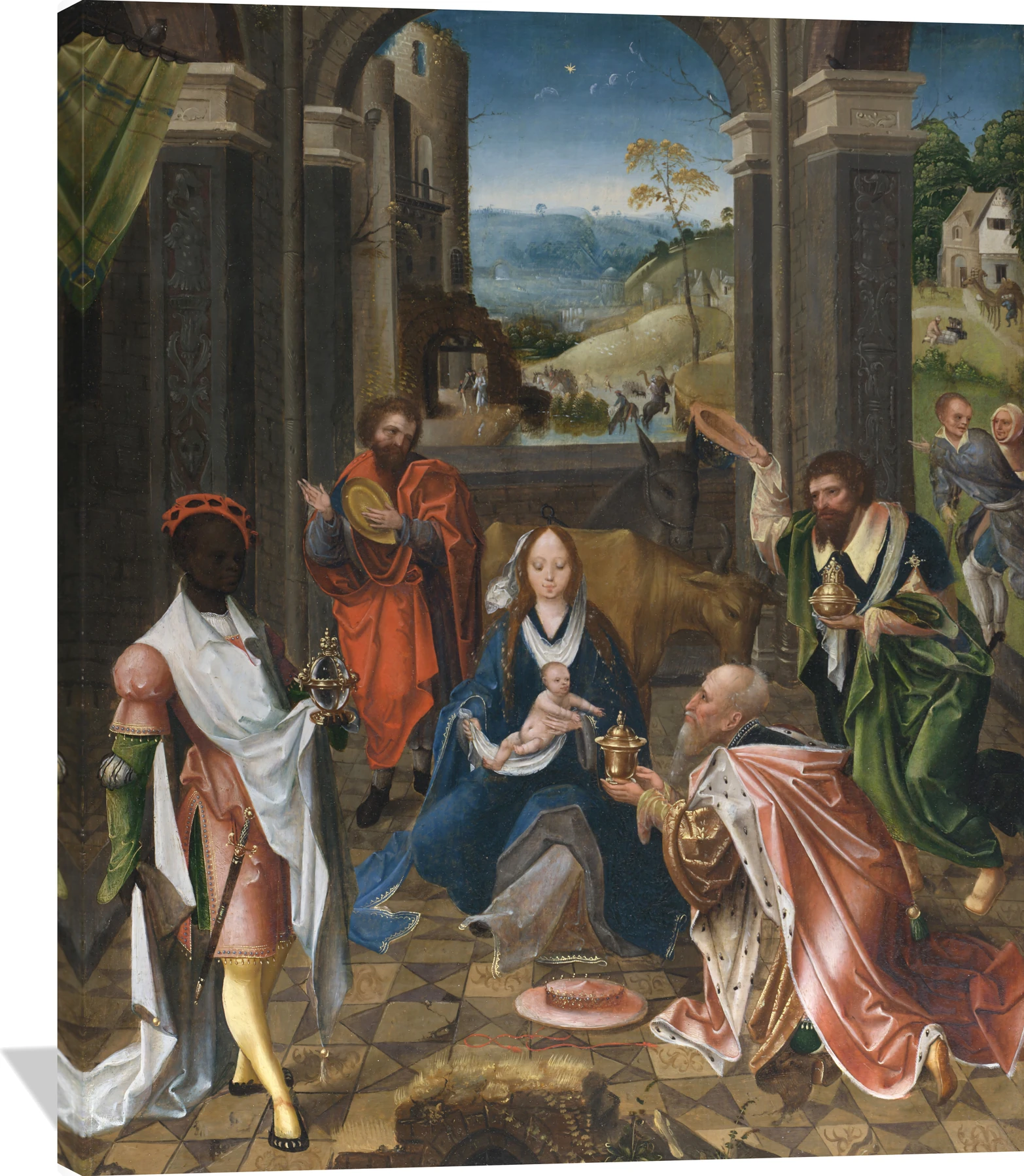
The Netherlandish (Antwerp Mannerist) Painter The Adoration of the Magi canvas captures a luminous moment of reverence and opulence. Painted circa 1520, this masterwork unfolds beneath grand arches, where richly robed figures present gifts to the Christ Child. Deep sapphire blues, rose pinks, warm golds, and earthy browns create a striking harmony that draws the viewer into its sacred narrative.
This exquisite wall art brings Renaissance elegance and spiritual depth to any interior. Ideal for a living room, study, or entryway, this museum-quality canvas print evokes timeless devotion and artistic grandeur, transforming your space with its intricate detail and serene composition.
The Netherlandish (Antwerp Mannerist) Painter active around 1520 represents a distinctive moment in early sixteenth‑century art, when the bustling mercantile city of Antwerp became a leading center for international trade and artistic exchange. Although the specific name of this artist is unknown, their work is closely associated with the group now referred to as the Antwerp Mannerists, celebrated for their ornate visual language and expressive reinterpretations of religious themes.
Artistic Style
This painter’s style is characterized by elegant figures, elaborate architectural backdrops, and a vivid interplay of color and ornament. The Antwerp Mannerist approach merges late Gothic intricacy with the emerging Renaissance interest in spatial depth and classical motifs. The result is a refined, theatrical aesthetic marked by dynamic poses, shimmering textiles, and richly detailed costumes, often used to heighten the emotional impact of familiar devotional scenes.
Typical Subjects
The artist’s works commonly depict narratives such as the Adoration of the Magi, the Epiphany, and other moments from the life of Christ. These compositions often include fantastical settings and a cosmopolitan blend of cultural elements, reflecting Antwerp’s role as a crossroads of Northern European and Mediterranean influences. Even in sacred contexts, attention to luxury fabrics, ornamented armor, and courtly pageantry reveals a fascination with worldly splendor.
Contributions and Significance
The Netherlandish (Antwerp Mannerist) Painter contributed to a pivotal shift in Northern European art, helping bridge late medieval traditions with emerging Renaissance sensibilities. Their work embodies the transition from Gothic expressiveness to a more global and theatrical visual identity, one that resonated with Antwerp’s thriving merchant class. Through complex compositions and exuberant decorative detail, the artist helped popularize a visual vocabulary that shaped religious painting in the Low Countries during the early sixteenth century.
Legacy
Though anonymous, this painter remains significant for capturing the cultural vibrancy of Antwerp at its artistic peak. Their paintings offer a vivid window into a world of heightened emotion, stylistic innovation, and luxurious material culture. Today, the Antwerp Mannerist tradition is valued for its distinctive blend of Gothic drama and early Renaissance refinement, a legacy to which this artist made a lasting and influential contribution.