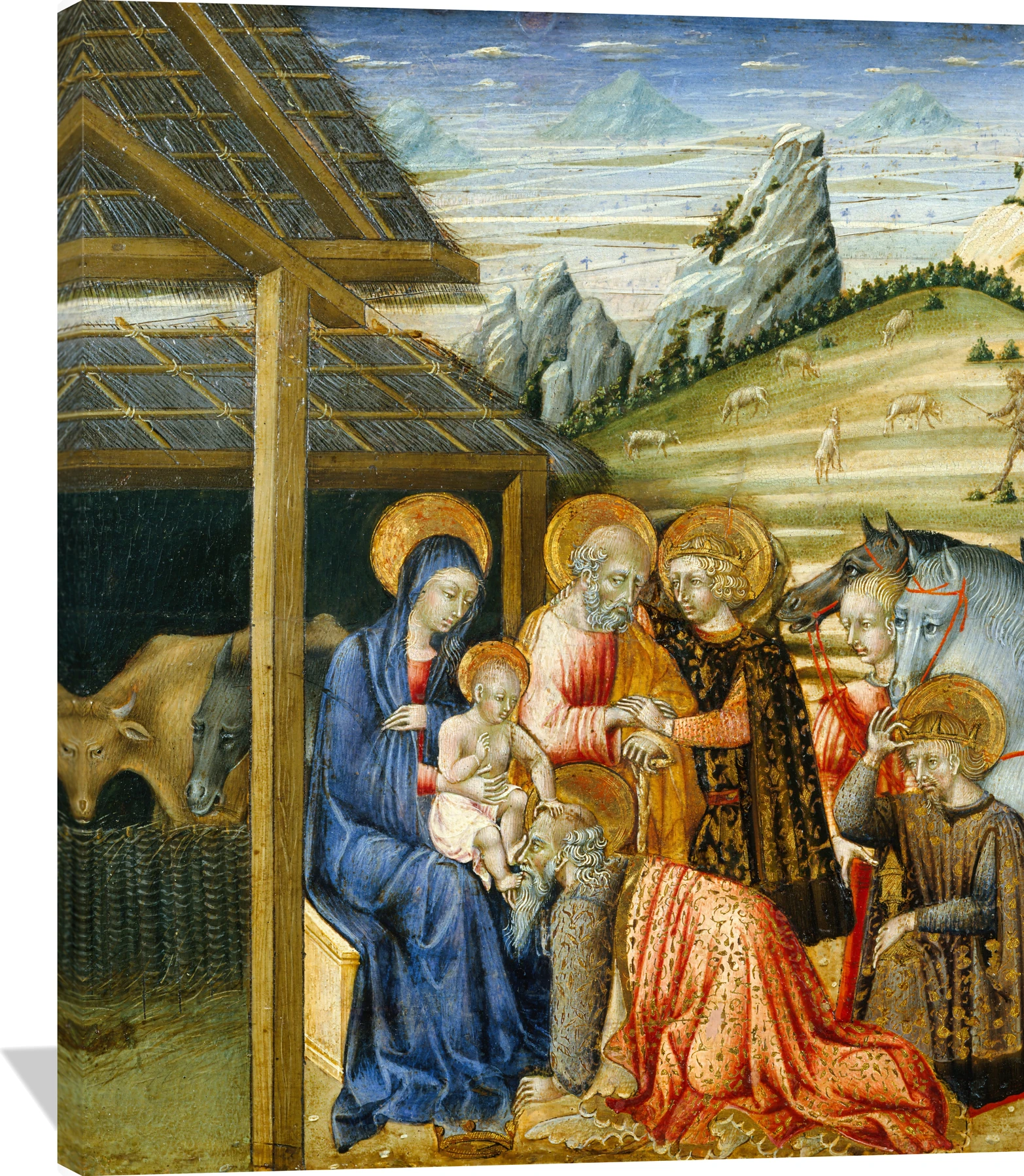
The Giovanni di Paolo The Adoration of the Magi canvas captures a moment of reverence and wonder in luminous gold, deep blue, and warm earth tones. The Italian master’s delicate detailing and radiant halos evoke divine light against a serene pastoral backdrop, inviting quiet reflection and timeless beauty into any space.
This exquisite wall art brings Renaissance grace to modern interiors, perfect for a living room, study, or entryway. A premium canvas print of Giovanni di Paolo’s masterpiece, it celebrates devotion, artistry, and the enduring power of faith through color and composition.
Giovanni di Paolo (Giovanni di Paolo di Grazia), born in Siena in 1398 and active there until his death in 1482, was one of the most imaginative painters of the Sienese Renaissance. His work is celebrated for its lyrical mysticism, expressive color, and dreamlike spatial inventions that set him apart from his contemporaries.
Artistic Style
Giovanni di Paolo’s style blends the elegance of the late Gothic tradition with emerging Renaissance sensibilities. His paintings are marked by radiant hues, elongated figures, and ethereal atmospheres. He often constructed space in unconventional, almost visionary ways, allowing his compositions to feel both intimate and otherworldly. This distinctive approach gives his works a poetic quality that remains instantly recognizable.
Subjects and Themes
A devoted Sienese artist, Giovanni di Paolo produced altarpieces, panel paintings, and illuminated manuscripts. His subjects range from tender Marian scenes and narratives from the life of Christ to depictions of saints and richly imagined episodes from Dante’s writings. Across these themes, he conveyed spirituality through delicate gesture, symbolic landscapes, and a heightened emotional tone.
Legacy and Cultural Significance
As a leading figure in fifteenth-century Siena, Giovanni di Paolo contributed significantly to the city’s visual identity. His work bridges medieval tradition and Renaissance innovation, offering a unique perspective during a period of artistic transition. He is especially admired for his illuminations in the choir books of the Siena Cathedral, which display his mastery of miniature detail and his ability to imbue sacred narratives with a sense of wonder. Today, he is regarded as one of the most inventive voices of the Sienese school and a master of spiritual storytelling.