Artistic Style
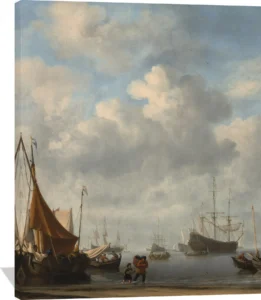
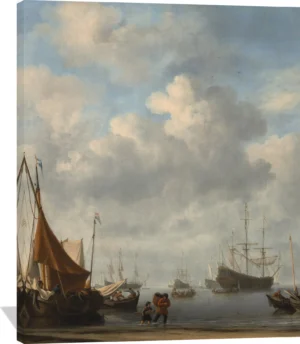
Renowned for his extraordinary precision and atmospheric clarity, van de Velde II created seascapes that balance meticulous detail with poetic light. His brushwork is exceptionally controlled, giving his paintings a refined, glasslike finish that became a hallmark of Dutch marine art. His ability to capture shifting skies, reflective waters, and the sculptural presence of ships set a new standard for realism in maritime painting.
Subjects and Themes
Van de Velde II specialized in depictions of naval vessels, merchant ships, tranquil harbors, and dramatic sea battles. Whether portraying quiet coastal scenes or intense naval engagements, he rendered every mast, sail, and rigging with remarkable specificity. His works often include Dutch and English fleets, documented with near-reportorial accuracy, offering a vivid window into seventeenth-century seafaring culture.
Legacy and Significance
Together with his father, Willem van de Velde the Elder, he became a leading figure in European marine art. After relocating to England, he served under royal patronage, influencing British maritime painting for generations. His mastery of light and composition, combined with his unwavering commitment to technical accuracy, makes him a defining artist of the era and a foundational figure in the visual history of naval life.