Artistic Style
Titian’s work is distinguished by its luminous color harmonies, atmospheric depth, and fluid handling of paint. He broke from rigid linear traditions by emphasizing tonal modulation and rich chromatic layering, creating surfaces that seem to glow from within. His later paintings, with their bold, textured strokes, established a foundation for what would become known as painterly technique, influencing artists for centuries.
Subjects and Themes
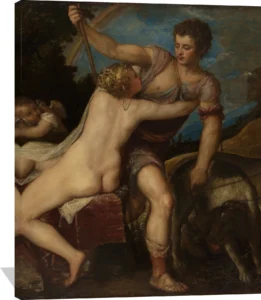
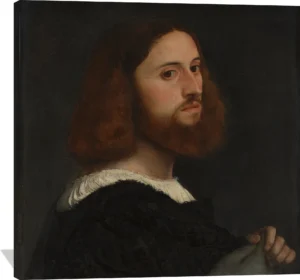
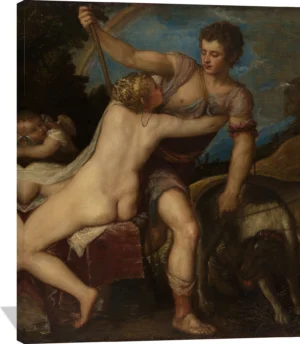
His repertoire spanned portraits, mythologies, altarpieces, and historical scenes. Titian’s portraits, celebrated for their psychological insight and dignified presence, depict sitters ranging from Venetian nobility to European rulers. His mythological works, including compositions such as Venus and Adonis and Bacchus and Ariadne, reveal his ability to merge sensuality, movement, and narrative drama. In religious works, he conveyed emotion with heightened color and dynamic compositions, bringing renewed vitality to traditional themes.
Legacy and Significance
As a leading figure of the Venetian Renaissance, Titian was renowned in his lifetime and served as painter to powerful patrons across Europe. His profound command of color and his evolving, experimental approach to technique influenced generations of artists, from Rubens to Velázquez. Today, he is celebrated as a pioneer whose innovations helped shape the language of Western art. Few painters have demonstrated such range, longevity, or artistic evolution, securing Titian’s place as one of the era’s most enduring and influential masters.