Artistic Style
Caruelle d’Aligny is best known for his serene, meticulously structured landscapes. His paintings reflect a commitment to classical ideals, favoring luminous atmospheres, precise draftsmanship, and carefully arranged compositions. Influenced by the legacy of Poussin and the emerging plein‑air sensibilities of his contemporaries, he achieved a distinctive equilibrium between idealized forms and observed nature. His use of light is restrained yet radiant, creating scenes that feel contemplative and enduring.
Subjects and Themes
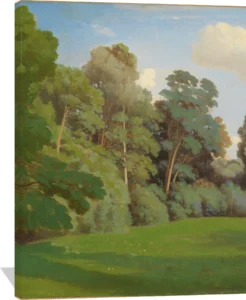
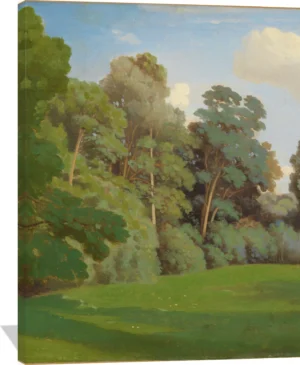
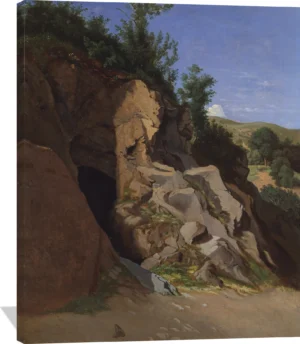
The artist frequently depicted pastoral vistas, ancient sites, and wooded countryside, often inspired by his travels through Italy and rural France. He infused these settings with a sense of historical continuity, portraying nature not merely as scenery but as a quiet stage for human presence and cultural memory. Whether capturing the glow of a distant horizon or the calm geometry of a grove, his works evoke a mood of order, reflection, and timeless beauty.
Legacy and Significance
Regarded as a key contributor to the French landscape tradition, Caruelle d’Aligny influenced a generation of painters who admired his disciplined approach and poetic restraint. His art stands at the intersection of classical structure and emerging naturalism, offering a vision of the landscape that is both elevated and intimately observed. Today, his paintings remain valued for their compositional purity and their ability to convey the landscape as a place of harmony, memory, and quiet grandeur.