Artistic Style
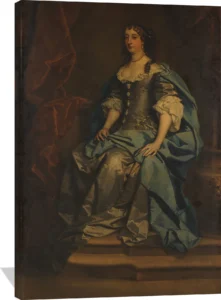
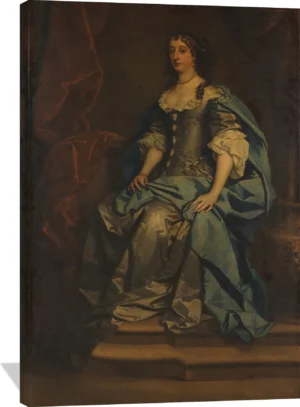
Lely’s portraits are distinguished by their graceful staging, luminous flesh tones, and a soft atmospheric quality that lent his sitters an air of polished elegance. His approach blended Dutch realism with the more theatrical sensibilities of the English court, resulting in compositions that feel both intimate and grand. His mastery of expression and gesture helped establish the visual ideal of aristocratic poise that dominated English portraiture for decades.
Typical Subjects
Specializing in portraits of nobility, courtiers, and prominent cultural figures, Lely captured the leading personalities of Restoration society. His series known as the Windsor Beauties remains particularly emblematic, portraying fashionable women of the court with a distinctive mix of naturalism and allegorical nuance. Across his work, flowing drapery, subtle symbolism, and serene yet penetrating gazes became his signature motifs.
Notable Contributions
After the death of Anthony van Dyck, Lely emerged as the preeminent painter of the English elite and ultimately served as Principal Painter to Charles II. His workshop was one of the most productive of the era, shaping the training and visual expectations of a generation of British artists. He also assembled an extraordinary collection of drawings by European masters, which influenced the study of art in Britain long after his death.
Cultural and Historical Significance
Lely’s portraits form an essential visual chronicle of Restoration England, capturing not only personal likenesses but the broader culture of refinement, power, and courtly splendor that defined the period. His ability to blend realism with idealization made his work enduringly influential, helping establish the aesthetic foundations of British portraiture and securing his legacy as one of the most important painters of the seventeenth century.