Artistic Style and Approach
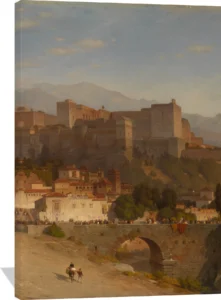
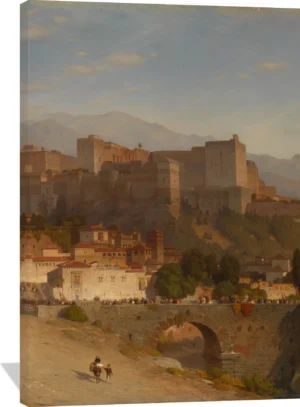
Colman is celebrated for his refined handling of light, atmosphere, and spatial balance. His landscapes often reveal sweeping vistas, crystalline clarity, and a meditative sense of scale. While grounded in realism, his work evokes a poetic tranquility that places him among the era’s most sensitive interpreters of the natural world. His mastery of watercolor, in particular, shows an exceptional command of tonal harmony and composition.
Subjects and Inspirations
Although known for scenes of the Hudson River Valley and New England, Colman traveled widely, creating luminous views of Europe, North Africa, and the American West. He frequently painted rivers, mountain ranges, coastal horizons, and architectural settings, capturing both the grandeur of nature and the quiet rhythm of daily life. Works such as Storm King on the Hudson exemplify his ability to merge topographical precision with atmospheric depth.
Legacy and Significance
Beyond painting, Colman contributed to the Arts and Crafts movement and collaborated on interior design projects that broadened his artistic influence. His role as a founding figure of the American Watercolor Society highlights his commitment to advancing the medium and supporting fellow artists. Today, his work is admired for its blend of technical skill, contemplative tone, and its reflection of a period when American art sought to define its own voice. His landscapes continue to resonate for their clarity of vision and their expression of a distinctively American aesthetic.