Artistic Style
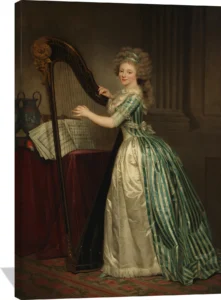
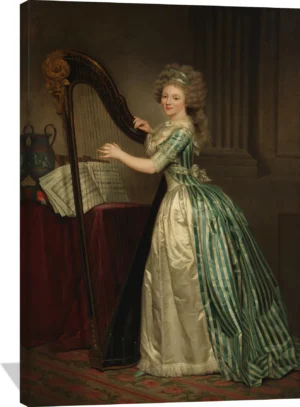
Ducreux’s work is characterized by a graceful blend of Neoclassical clarity and the lingering softness of the Rococo. Her portraits exhibit luminous surfaces, measured compositions, and a polished finish that reflects her mastery of detail. She often incorporated musical instruments or personal objects, showcasing a cultivated poise that became a signature element of her style.
Subjects and Themes
Best known for her self-portraits, Ducreux frequently depicted women engaged in music or refined domestic arts. These images offer a subtle yet compelling vision of female intellect and artistry during a period when such expressions were rarely centered. Her sitters appear confident and self‑possessed, rendered with sensitivity to posture, gesture, and the interplay of light with fabric and skin.
Legacy and Significance
Although her life was cut short in Santo Domingo in 1802, Ducreux left an enduring impression on French portraiture. Her paintings stand out for their serene elegance and for the way they merge artistic accomplishment with personal identity. Today, she is recognized as a skilled portraitist whose work offers valuable insight into women’s self‑representation in the years surrounding the French Revolution. Her refined technique and distinctive approach continue to resonate with contemporary audiences, affirming her place as a notable figure in late‑eighteenth‑century French art.