Artistic Style
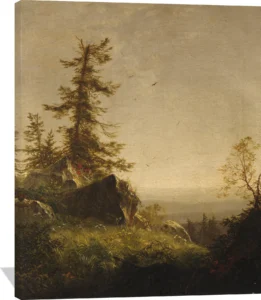
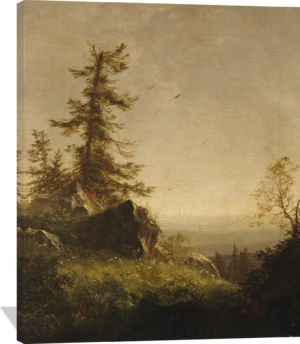
Hubbard’s paintings are characterized by luminous light, gentle tonal transitions, and a harmonious balance between foreground detail and distant perspective. His style often emphasized serenity rather than spectacle, offering landscapes that feel contemplative and inviting. This subtle yet evocative quality became a hallmark of his work and contributed to his reputation as a painter of quiet natural beauty.
Subjects and Themes
The artist frequently depicted woodland interiors, sunlit clearings, and pastoral vistas, focusing on the interplay of light across foliage and water. Whether painting rural New England or scenes inspired by his European travels, Hubbard brought a sense of order and tranquility to his compositions. His works often evoke a moment suspended in time, encouraging viewers to engage with nature’s understated elegance.
Legacy
As part of the Hudson River School’s broader movement, Hubbard contributed to shaping America’s 19th‑century artistic identity. His paintings reflect the era’s growing appreciation for the landscape as both cultural symbol and artistic subject. Today, his work is valued for its refined technique, its gentle Romantic sensibility, and its ability to convey the enduring, restorative presence of the natural world.