Artistic Style and Subjects
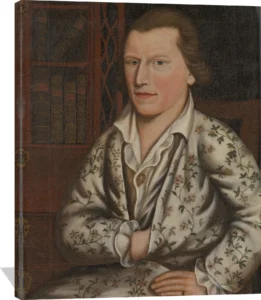
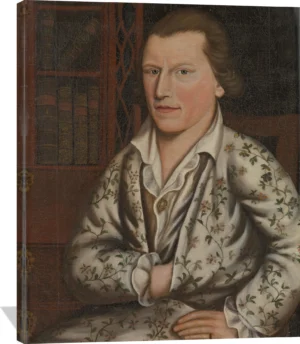
Barnes’s paintings reflect the conventions of eighteenth‑century Anglo‑American portraiture, characterized by careful modeling of the face, subtle tonal transitions, and an emphasis on the sitter’s social presence. His known works, including the portrait of William Duguid and his evocative Self‑Portrait, reveal a precise handling of line and a nuanced sensitivity to human expression. Barnes favored direct, uncluttered compositions that highlighted the individuality of his subjects, demonstrating an emerging artistic voice grounded in observation and skill.
Notable Contributions
As one of the only identified African American painters working in the colonies before the Revolutionary War, Barnes occupies a singular place in early American art. In 1773 he received formal instruction from the English painter Robert Edge Pine, an unusual opportunity for any colonial artist and exceptionally rare for an enslaved man. His surviving works attest to a level of training and personal dedication that sets him apart from many of his contemporaries.
Cultural and Historical Significance
Barnes’s career unfolds against the backdrop of a society shaped by slavery and emerging revolutionary ideals. His ability to produce refined portraiture despite the constraints of enslavement speaks to both his resilience and his artistic ambition. During the Revolutionary War, he gained his freedom and enlisted in the Massachusetts militia, underscoring the complexity of his lived experience.
Today, Barnes is recognized as a pioneering early African American artist whose paintings offer rare insight into Black creative achievement in eighteenth‑century America. His work remains valued for its technical quality, historical importance, and the powerful narrative embodied in each brushstroke.