Artistic Style
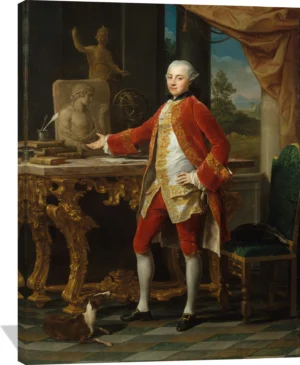
Batoni’s work blends late Baroque richness with the harmony and restraint of early Neoclassicism. His portraits are distinguished by their luminous color, immaculate draftsmanship, and a masterful rendering of fabrics, textures, and expressive features. He often placed sitters against classical architectural settings or near symbolic objects, giving his works both visual grandeur and intellectual depth.
Subjects and Contributions
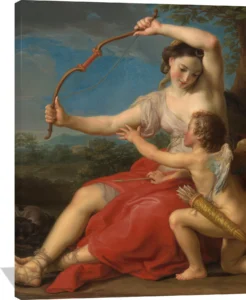
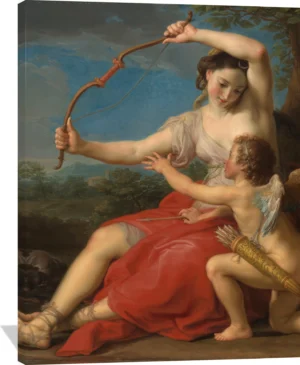
Although best known for his portraits, Batoni also produced altarpieces and mythological compositions, showing his versatility across religious and secular themes. His Grand Tour portraits became a cultural phenomenon, setting a new standard for the genre and influencing generations of European portraiture. Many works feature subtle narrative elements, blending personal identity with classical heritage.
Cultural Significance
Regarded as the leading portrait painter in Rome during his lifetime, Batoni played a pivotal role in shaping the visual legacy of eighteenth-century European society. His ability to merge naturalistic representation with a refined classical sensibility made his paintings enduring symbols of sophistication and intellectual aspiration. Today, his works remain celebrated for their precision, elegance, and the unique window they offer into the cultural world of the Grand Tour.