Artistic Style
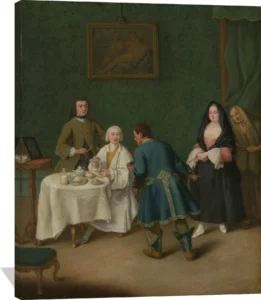
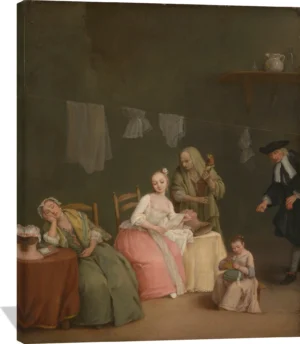
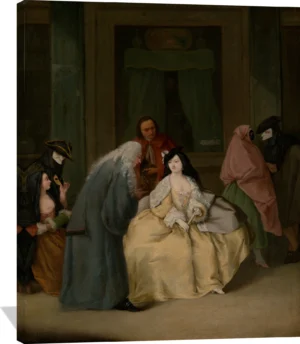
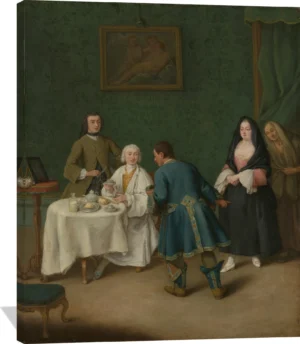
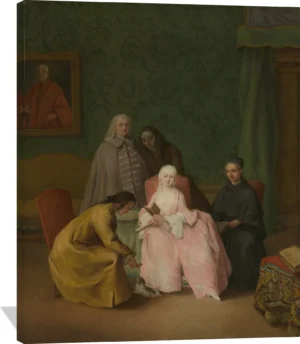
Longhi’s work is distinguished by a refined yet understated Rococo sensibility. His compositions favor soft palettes, delicate brushwork, and an inviting sense of immediacy. Rather than grand historical scenes, he focused on the subtle drama of everyday moments, capturing gestures, glances, and spaces with remarkable clarity. This approach has made him a defining voice in Venetian genre painting.
Subjects and Themes
Longhi’s paintings often depict domestic interiors, masked gatherings, and public entertainments, offering quiet but incisive observations of Venetian society. He portrayed musicians, nobles, merchants, and theatergoers with a blend of gentle humor and psychological insight. Scenes such as a family gathered around a pet, a lady consulting a fortune teller, or a masked visitor entering a salon reveal his fascination with human behavior and social performance.
Legacy and Significance
Through his attentive documentation of daily customs, Longhi created an enduring visual archive of life in eighteenth‑century Venice. His work stands out for its intimacy, charm, and the subtle yet powerful way it captures the city’s cultural rhythms. Today, he is regarded as a crucial chronicler of Venetian society and a master of the genre scene, valued for the timeless insight and authenticity embedded in his art.