Artistic Style and Subjects
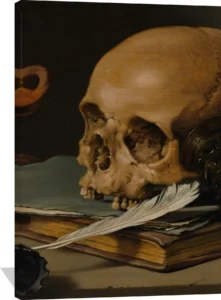
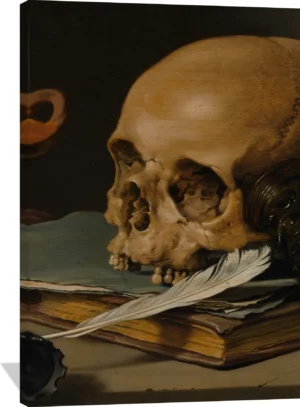
Claesz is best known for his monochromatic palette, meticulous detail, and the serene balance of his compositions. He often depicted humble yet evocative objects such as glassware, pewter vessels, bread, citrus fruit, and overturned goblets. These arrangements conveyed an understated drama through the interplay of light on reflective surfaces. His Vanitas scenes, featuring symbols like skulls, extinguished candles, and timepieces, offered contemplations on the brevity of life. Works such as Still Life with a Skull and a Writing Quill exemplify his ability to blend realism with philosophical depth.
Contribution and Significance
As one of the pioneers of the Haarlem still-life school, Claesz developed a restrained visual language that influenced generations of Dutch painters. His subtle tonalities and controlled compositions elevated the still-life genre from simple depiction to a form of quiet introspection. Claesz’s ability to evoke texture, atmosphere, and mood made him a central figure in the evolution of seventeenth-century realism.
Today, Pieter Claesz is recognized for his innovative tonal still lifes and his profound sensitivity to light, making his work a timeless study in elegance, balance, and the beauty of the everyday.