Artistic Style
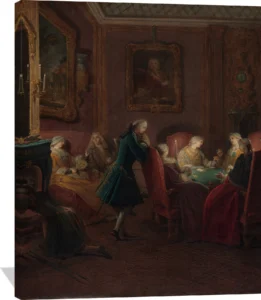
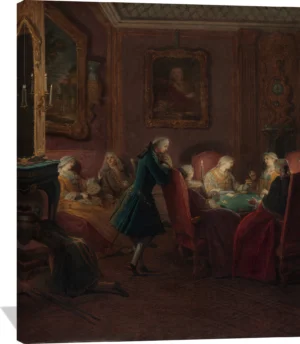
Dumesnil’s work reflects the lightness and grace associated with Rococo painting, yet his compositions are anchored by a gentle realism. His palette favored soft, luminous tones, and his brushwork brought subtle textures to fabrics, interiors, and expressive gestures. This blend of refinement and naturalism contributed to the enduring appeal of his scenes.
Subjects and Themes
Best known for intimate portrayals of bourgeois households, Dumesnil depicted moments of leisure, music-making, games, and social interaction. These carefully observed scenes offer insight into the customs and rhythms of eighteenth‑century Parisian life. His ability to convey character through posture and detail made his paintings both engaging and culturally resonant.
Legacy and Significance
Dumesnil held a respected position within the artistic circles of his time, admired for his mastery of genre painting and his contribution to the visual record of French domestic culture. His work provides a nuanced window into the social refinement and evolving tastes of pre‑Revolutionary France, securing his place as a subtle yet influential voice in the development of genre art.
Today, Pierre Louis Dumesnil the Younger is valued for his evocative genre scenes and the way his paintings illuminate the sophistication and quiet intimacy of eighteenth‑century Parisian life.