Artistic Style
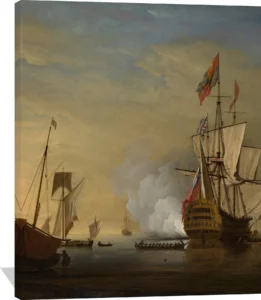
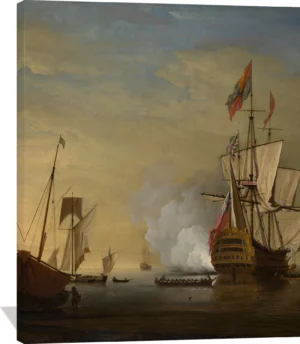
Monamy’s paintings are celebrated for their harmonious blend of observational accuracy and expressive nuance. His depictions of ships, coastlines, and changing skies showcase a command of light and movement, while his carefully structured compositions lend clarity to even the most turbulent scenes. Though influenced by the Dutch seafaring tradition, he forged a distinctly English sensibility, emphasizing clarity, balance, and an understated yet compelling emotional tone.
Notable Subjects and Contributions
Specializing in naval engagements, harbor views, and coastal panoramas, Monamy captured the evolving power of the British fleet during the early eighteenth century. His renderings of maritime events, including celebrated battles and the daily life of seafarers, offered contemporaries a vivid visual record of an era defined by exploration and naval might. Works such as The Royal Sovereign at Sea highlight his ability to evoke both grandeur and intimate atmospheric detail.
Cultural and Historical Significance
As one of the first prominent English-born marine painters, Monamy played a foundational role in establishing the genre within British art. His influence extended to later figures, including Samuel Scott, and helped shape London’s thriving market for nautical imagery. Today, his paintings remain valued for their historical insight, artistic refinement, and their contribution to Britain’s long-standing maritime visual tradition.