Artistic Style
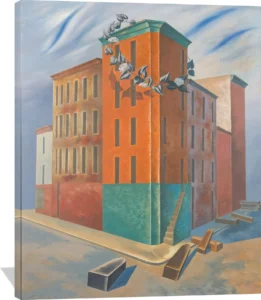
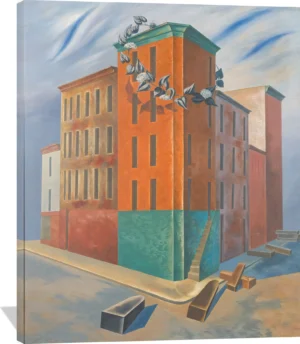
Guglielmi’s work is defined by meticulously rendered scenes infused with an uncanny, dreamlike atmosphere. Architectural fragments, quiet streets, and ordinary objects often appear suspended in a tense stillness, transforming familiar urban settings into charged psychological spaces. His palette, carefully controlled and often subdued, heightens the sense of introspection while revealing the subtle beauty of overlooked environments.
Subjects and Themes
Through symbolic compositions and measured detail, Guglielmi explored themes of isolation, economic hardship, and the fragility of modern life. He frequently depicted working‑class neighborhoods, vacant lots, and atmospheric city corners, using them as metaphors for both personal reflection and broader social anxieties. Even in his more surreal works, the emotional clarity remains unmistakable, grounding his imagery in a world that feels both real and quietly uncanny.
Legacy and Significance
Guglielmi’s contribution lies in his ability to merge exacting draftsmanship with subtle psychological depth. His paintings stand as refined examples of American Magic Realism, offering an introspective counterpoint to more overtly political movements of his era. Today he is recognized for his evocative visual symbolism and his capacity to elevate everyday scenes into moments of profound contemplation.