Artistic Style
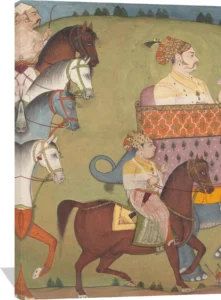
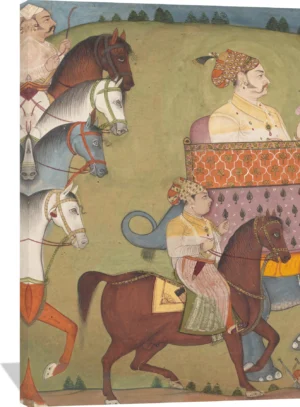
Nihal Chand’s paintings are recognized for their elongated, graceful figures, delicately arched eyebrows, and an aura of lyrical serenity. His palette favors soft yet luminous tones, creating compositions that feel both intimate and otherworldly. The hallmark of his style is the idealized female form, epitomized in the famed representations of Bani Thani, whose features became a visual emblem of the Kishangarh aesthetic.
Subjects and Themes
Devotional narratives, especially those centered on Krishna and Radha, dominate Nihal Chand’s work. He infused these themes with a sense of spiritual longing and romantic idealism, transforming traditional scenes into emotionally resonant visions. Landscapes, often rendered with serene lakes, stylized trees, and moonlit skies, serve as contemplative environments that heighten the devotional mood.
Cultural Significance
Nihal Chand played a crucial role in defining the Kishangarh school as one of the most refined strands of Rajput painting. His work embodies the blend of courtly sophistication, poetic symbolism, and devotional sentiment that marks this tradition. The iconic Bani Thani, attributed to him, has become a cultural symbol of Rajasthan and a celebrated representation of idealized beauty in Indian art.
Legacy
Through his innovative compositions and the emotional depth of his imagery, Nihal Chand shaped a visual language that continues to influence Indian miniature painting. His ability to merge spiritual themes with exquisite artistry has secured his place as a master of the Kishangarh style and a defining figure in the history of Rajput art.