Artistic Style and Technique
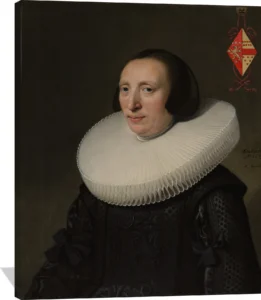
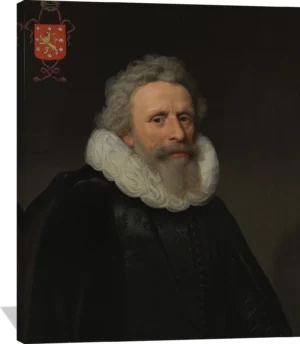
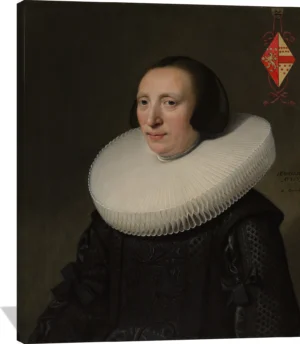
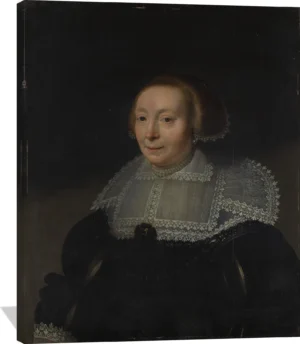
Mierevelt’s portraits are distinguished by their quiet dignity, smooth finish, and precise rendering of textiles, jewelry, and facial features. His style favors balanced compositions, restrained color palettes, and a subtle luminosity that enhances the sitter’s presence. Through these qualities, he achieved a powerful sense of immediacy that set him apart from many contemporaries.
Subjects and Themes
Specializing almost exclusively in portraiture, Mierevelt portrayed statesmen, scholars, military officers, and members of prominent Dutch families. His sitters often appear poised and contemplative, framed by minimal backgrounds that keep focus firmly on character and status. Works such as his many depictions of stadholders and their courts illustrate not only individual likenesses but also the cultural identity of the early Dutch Republic.
Historical and Cultural Significance
As the principal court painter in Delft, Mierevelt played a central role in shaping the era’s visual record. His workshop, one of the most prolific of the period, disseminated a consistent and recognizable aesthetic across the Netherlands and beyond. His portraits offer invaluable insight into the political, intellectual, and social life of the 17th century, contributing to the wider narrative of Dutch Golden Age art.
Enduring Legacy
Mierevelt’s work remains admired for its precision, grace, and humanity. His portraits capture the essence of a transformative historical period, preserving the individuality and stature of his subjects with remarkable restraint and clarity. Today, collectors value his ability to combine technical mastery with a timeless, understated elegance.