Artistic Style
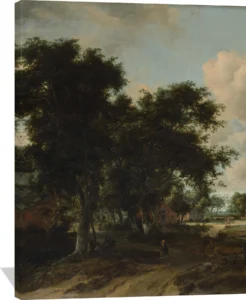
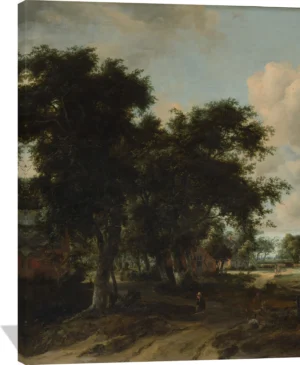
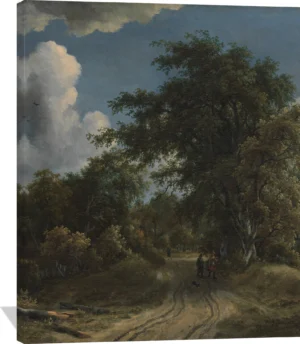
Hobbema’s paintings are defined by their balanced compositions, naturalistic detail, and luminous depiction of the Dutch countryside. His mastery of light and shadow, combined with a keen sensitivity to atmospheric effects, allowed him to elevate everyday rural scenery into evocative, contemplative works. He often emphasized depth through winding paths, reflective water surfaces, and carefully arranged clusters of trees, creating landscapes that feel both intimate and expansive.
Subjects and Notable Contributions
Known for forested lanes, watermills, and rustic village views, Hobbema brought enduring charm to subjects drawn from ordinary life. His works such as The Avenue at Middelharnis demonstrate a remarkable ability to structure space with clarity and rhythm, showcasing his signature precision and a subtle sense of movement. These compositions became influential models for later landscape painters across Europe.
Cultural and Historical Significance
Though not widely celebrated during his lifetime, Hobbema’s paintings came to be highly valued in the centuries that followed, admired for their authenticity and poetic restraint. Today, he is recognized as a key figure in Dutch landscape painting, contributing significantly to the genre’s evolution. His refined portrayal of rural environments, along with his enduring influence on subsequent generations, secures his place as one of the most important landscape artists of the period.