Artistic Style
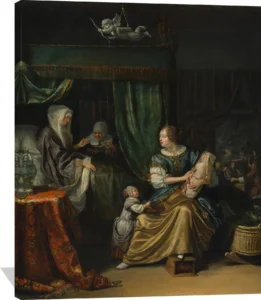
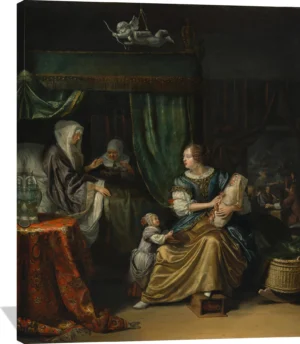
Naiveu’s work is recognized for its precision and richly finished surfaces, reflecting the influence of Leiden fijnschilders. His paintings often feature controlled lighting, smooth brushwork, and a high level of descriptive detail, resulting in scenes that feel both refined and approachable. He excelled in crafting balanced compositions where each element supports the storytelling at the heart of the image.
Subjects and Themes
Typical subjects in Naiveu’s oeuvre include domestic interiors, musical gatherings, tavern scenes, and depictions of children at play. These moments, though modest in scale, are rendered with remarkable nuance. Figures interact naturally within their settings, giving viewers insight into the textures of 17th‑ and early 18th‑century life. His occasional outdoor festivities and ceremonial scenes highlight his ability to animate group compositions without losing the intimate charm for which he became known.
Legacy and Significance
Throughout his career, Naiveu contributed to the continuation of Dutch genre painting at a time when tastes were shifting toward more international styles. His dedication to the highly polished Leiden tradition helped preserve its influence into the early 18th century. Today, collectors and scholars value his paintings for their exceptional craftsmanship and their ability to communicate the warmth and subtle humor embedded in daily experience.
Naiveu’s works remain admired for their harmonious blend of technical mastery and narrative insight, offering a vivid window into the cultural life of the Dutch Republic at the close of its artistic golden age.