Artistic Style
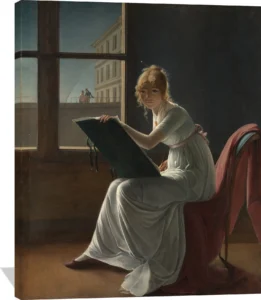
Villers is best known for her luminous neoclassical style, characterized by clarity of form, balanced compositions, and an elegant restraint. Her paintings often feature subtle gradations of light that heighten the psychological presence of her sitters. She favored smooth, polished surfaces and delicate modeling, creating portraits that feel both serene and vividly alive.
Notable Contributions
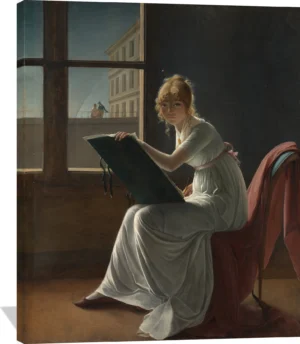
Among her most celebrated works is Young Woman Drawing, a portrait long admired for its masterful technique and its engagement with themes of creativity and self-representation. While attribution of the painting was historically debated, its lasting impact underscores Villers’s ability to produce images of rare poetic immediacy. Her work contributed meaningfully to the visibility of women artists within the French artistic sphere, reinforcing the importance of women’s perspectives in the visual culture of her era.
Subjects and Themes
Villers gravitated toward portraits that conveyed introspection and emotional nuance. Her sitters, often women, are rendered with a dignified presence that conveys both individuality and symbolic resonance. She excelled at capturing the quiet intelligence and inner life of her subjects, making each composition feel like an intimate exchange between artist and viewer. Her use of light, gesture, and carefully observed detail imbues even simple settings with narrative richness.
Cultural Significance
As a woman navigating the artistic institutions of post-Revolutionary France, Villers occupies a significant place in art history. Her achievements reflect the shifting cultural landscape that allowed more women to participate in professional artistic production. Though she produced a relatively small known body of work, her paintings remain valued for their technical finesse and their subtle yet powerful exploration of identity, creativity, and personal presence.
Today, Marie Denise Villers is recognized as a distinctive voice within French Neoclassicism, celebrated for her keen observational skill and her ability to transform portraiture into a form of quiet storytelling. Her legacy endures through a handful of exquisitely crafted works that continue to inspire admiration and offer insight into the artistic possibilities of her time.