Artistic Style
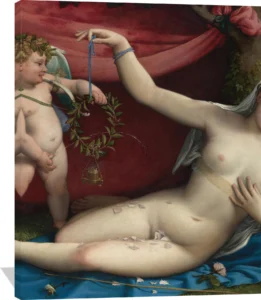
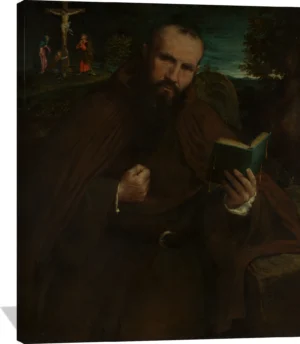
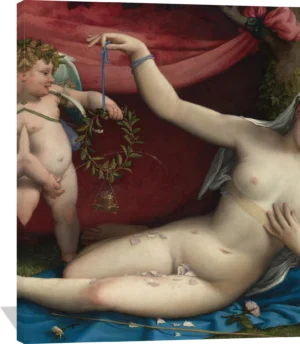
Lotto is renowned for his psychologically insightful portraiture, marked by expressive gestures, intricate textures, and vivid color harmonies. His compositions often reveal a heightened sense of introspection and humanity, distinguishing him from the more classical balance favored by his Venetian peers. His paintings display a dynamic interplay of light and shadow, enriching the emotional tone and drawing viewers into the inner worlds of his subjects.
Notable Contributions
Working in relative independence from dominant artistic circles, Lotto created altarpieces, portraits, and narrative works that showcased his distinctive blend of realism and spiritual depth. His altarpieces, such as the celebrated Altarpiece of San Bernardino, demonstrate his gift for complex storytelling and luminous color. In portraiture, he introduced an unprecedented psychological immediacy, earning him recognition today as one of the Renaissance’s most original portraitists.
Subjects and Themes
Lotto’s oeuvre includes noble patrons, clergy, merchants, and deeply personal religious imagery. His subjects are often presented with symbolic objects that reveal aspects of their character or faith. This commitment to individual characterization, combined with his refined technique, gives his work a uniquely intimate quality. His religious paintings reflect both devotional intensity and nuanced interpretation, bridging the spiritual and the everyday.
Cultural Significance
Although overshadowed in his lifetime by more prominent Venetian masters, Lotto’s work has gained renewed appreciation for its originality and emotional depth. Today he is celebrated for his role in expanding the expressive possibilities of Renaissance art. His paintings offer a rare fusion of technical mastery and human sensitivity, securing his place as a distinctive and influential figure within the broader narrative of Italian Renaissance painting.