Artistic Style and Subjects
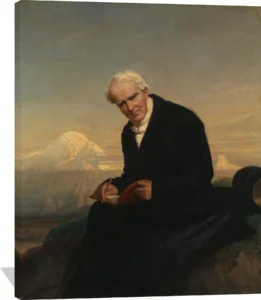
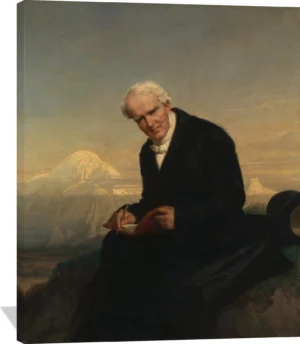
Schrader’s work is distinguished by its polished realism, controlled dramatic tension, and careful attention to costume, gesture, and setting. He excelled in portraying historical and literary themes, often focusing on moments of intense psychological significance. His portraits reveal a similar sensitivity, marked by clear modeling, elegant composure, and a subtle interplay of light and texture.
Notable Contributions
Renowned for compositions such as Lady Jane Grey on the Way to Execution and Frederick William IV in His Study, Schrader brought a humanizing perspective to major historical figures. His paintings avoid grandiose spectacle in favor of intimate, emotionally resonant storytelling. This approach positioned him as a leading figure in mid‑19th‑century German history painting and contributed to the broader European interest in psychologically driven narrative art.
Cultural Significance
As a professor at the Prussian Academy of Arts, Schrader helped shape the artistic language of his time by mentoring younger painters and promoting a thoughtful, academically grounded approach to composition. His work reflects the intellectual climate of 19th‑century Berlin, where modernity, nationalism, and romantic historical consciousness intersected.
Today, Julius Schrader is appreciated for his refined historical realism and for artworks that continue to captivate through their balance of accuracy, atmosphere, and emotional nuance.