Artistic Style and Approach
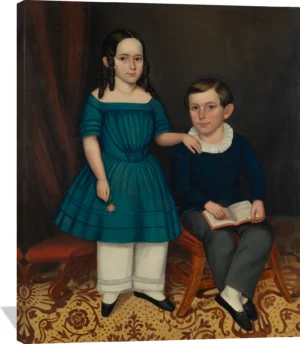
Stock developed a refined folk‑art style marked by precise draftsmanship, gentle modeling, and a keen sensitivity to his sitters’ personalities. His compositions often feature crisp contours, careful attention to clothing and decorative objects, and a harmonious balance between figure and setting. Confined to a wheelchair after a childhood accident, he frequently worked from a customized rolling chair that allowed him to travel to clients’ homes, shaping a unique perspective in his portrait practice.
Subjects and Notable Contributions
Best known for his portraits of children, families, and prominent local citizens, Stock created images that blend emotional warmth with dignified formality. His paintings often include symbolic details such as toys, books, or household items that deepen the viewer’s understanding of the sitter’s character. Stock also documented many of his clients’ homes and furnishings, making his works valuable records of 19th‑century American domestic life.
Historical Significance
Stock’s legacy lies in his ability to elevate regional portraiture into a distinctive artistic voice. Working during a period when photography had not yet eclipsed painted likenesses, he provided an essential visual record of everyday Americans and their evolving cultural identities. His oeuvre stands today as a remarkable testament to perseverance, innovation, and the enduring appeal of American folk portraiture.