Artistic Style
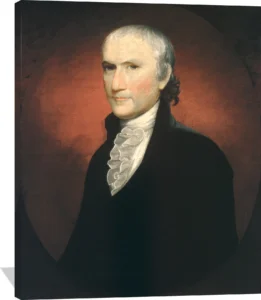
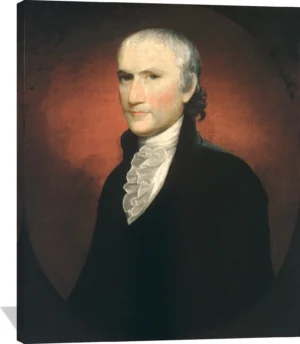
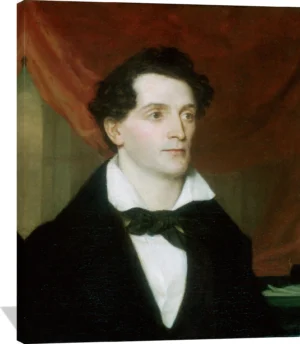
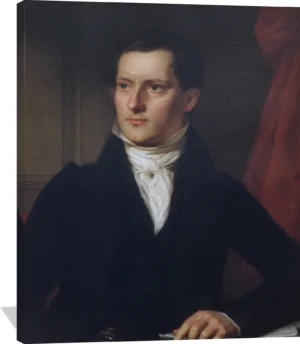
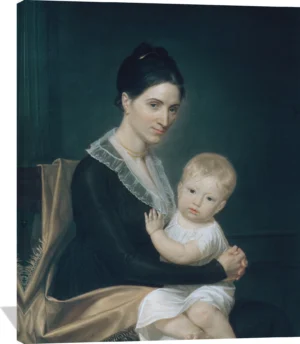
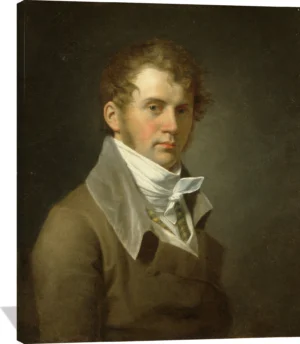
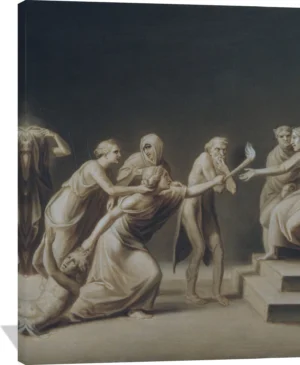
Vanderlyn’s paintings are characterized by their polished technique, balanced compositions, and smooth, meticulous surfaces. His commitment to the French academic style set him apart in an era when many American artists leaned toward British portrait traditions. This classical approach, combined with his exacting draftsmanship, gave his portraits and historical scenes a uniquely refined presence.
Notable Contributions
Best known for historically significant works such as his panoramic masterpiece The Landing of Columbus for the U.S. Capitol Rotunda, Vanderlyn brought ambitious, large-scale narrative painting into the American artistic canon. His creation of the first American-style panorama exhibition also demonstrated a pioneering spirit in visual storytelling, presenting immersive scenes that captivated nineteenth-century audiences.
Subjects and Themes
Vanderlyn painted dignified portraits, grand historical narratives, and carefully rendered landscapes. His portraits reveal a mastery of likeness and character, while his historical works reflect the early nation’s desire to assert cultural identity. In landscapes, he employed controlled lighting and subtle detail to enhance mood and clarity.
Cultural Significance
As one of the earliest American artists to study extensively in France, Vanderlyn played a crucial role in shaping the trajectory of American fine arts. His dedication to academic rigor and his international perspective helped introduce a more cosmopolitan artistic language to the United States. Today, he is recognized for his influential contributions and his commitment to establishing higher artistic standards within the young American republic, making him a figure of enduring significance in early American art.