Artistic Style
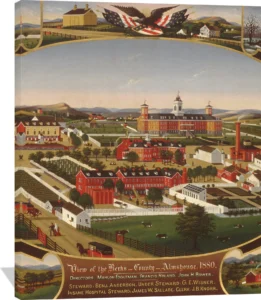
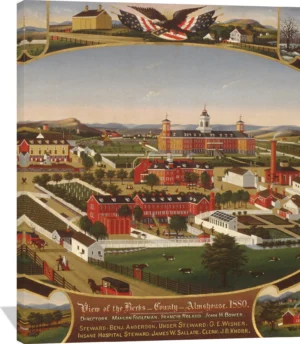
Rasmussen’s work is rooted in the traditions of American folk art, yet it displays an uncommon level of linear discipline. His drawings often feature crisply rendered fortifications, patriotic motifs, and orderly townscapes, composed with an almost cartographic accuracy. This combination of intuitive creativity and technical rigor gives his images a quietly compelling character.
Subjects and Themes
He is best known for detailed depictions of military forts and historic buildings, many of which reflect memories of his military experiences. These works often evoke themes of structure, order, and national identity. Rasmussen’s calm, measured lines and careful shading create a sense of serenity even in scenes connected to conflict, lending his compositions their distinctive appeal.
Legacy and Significance
Rasmussen’s drawings are valued today for their historical resonance and for the insight they offer into the expressive power of self-taught artists. His ability to transform recollection into structured visual form has made him an important figure in the study of American folk and outsider art. Collectors prize his work for its quiet beauty, disciplined craftsmanship, and the way it bridges personal memory with broader cultural history.