Artistic Focus and Style
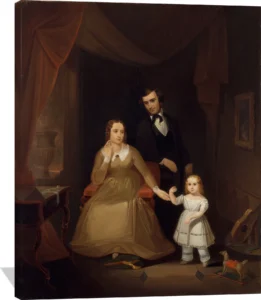
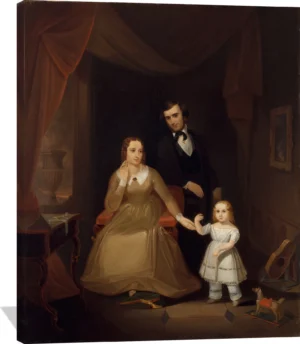
Stanley’s work is distinguished by its meticulous draftsmanship, atmospheric lighting, and an approach that blends documentary precision with the expressive qualities of Romanticism. His paintings often capture expansive terrains, vivid color harmonies, and carefully rendered cultural details, giving viewers an intimate sense of place and presence. A hallmark of his style is the way he combines portraiture and landscape, allowing human stories to unfold within vast natural settings.
Notable Subjects and Contributions
Deeply engaged with the American West, Stanley produced extensive visual records of Native American life, portraying tribal leaders, daily activities, ceremonies, and encampments with notable sensitivity. His depictions served as invaluable documentation at a time when few artists traveled these regions. He joined government expeditions, created panoramic scenes of frontier life, and assembled large touring exhibitions that introduced eastern audiences to cultures they had never encountered directly.
Cultural and Historical Significance
Although much of his oeuvre was tragically lost in the 1865 Smithsonian fire, Stanley’s surviving works remain essential to understanding nineteenth‑century American art and ethnography. His paintings stand out for their respectful observation and for offering a visual record of communities whose histories were often marginalized. Today, he is recognized as a key figure in shaping early American views of the West and as a painter whose commitment to cultural documentation gives his art enduring resonance.
John Mix Stanley’s legacy rests in his role as a *strong* storyteller of frontier America, preserving moments of profound transition with both artistic sensitivity and historical depth.