Artistic Style and Approach
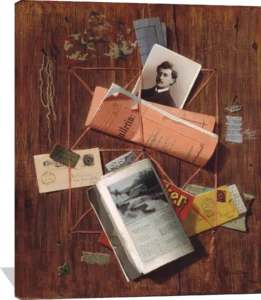
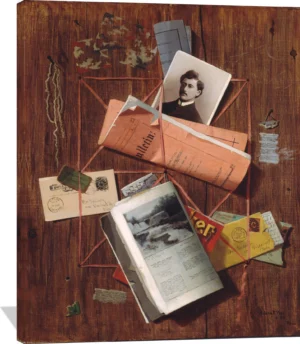
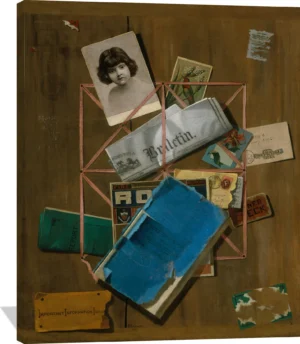
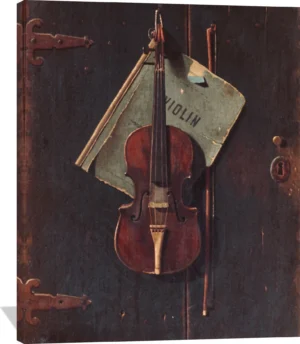
Peto specialized in trompe-l’oeil painting, creating images that convincingly simulate three‑dimensional objects on a flat surface. Unlike many contemporaries, he favored a subtly weathered aesthetic, using worn books, tarnished metal, fading photographs, and timeworn personal items. His muted palettes and soft handling of light lend these objects a contemplative, almost meditative quality. This distinctive sensibility established him as a major figure in the tradition of American illusionistic still life.
Subjects and Themes
Peto’s compositions often feature everyday objects arranged with deliberate imperfection. Items appear chipped, frayed, or slightly askew, revealing his fascination with memory, transience, and the passage of time. Works such as his iconic board paintings and arrangements of battered books evoke a mood of quiet introspection. Through carefully rendered surfaces and modest subjects, he transformed the ordinary into a source of visual poetry.
Legacy and Significance
Though he achieved limited recognition during his lifetime, Peto’s contributions came to be highly valued in the decades following his death. His paintings display a uniquely American blend of realism and emotional depth, standing apart for their intimate scale and contemplative tone. Today, he is celebrated for his innovative trompe-l’oeil technique and his ability to imbue humble objects with a profound sense of presence. His work continues to resonate with collectors and viewers drawn to images that honor the beauty found in everyday experience.