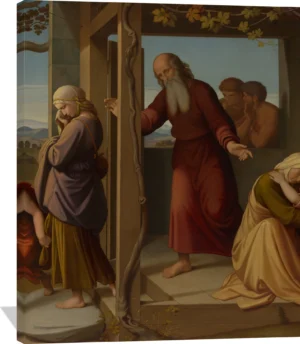
Artistic Style
Overbeck’s style is defined by graceful linearity, restrained composition, and an unwavering focus on spiritual narrative. Rejecting the dramatic excesses of late Baroque and the cool distance of Neoclassicism, he embraced an idealized form of Christian art rooted in the harmony and humility of Quattrocento painters. This approach established him as a central force in the renewal of religious aesthetics during his era.
Subjects and Themes
His paintings often depict biblical events, saints, and allegories infused with contemplative calm. Figures are rendered with delicate outlines and luminous simplicity, emphasizing moral clarity over ornamentation. Whether illustrating sacred stories or creating devotional imagery, Overbeck sought to elevate viewers toward a sense of spiritual reflection.
Legacy and Significance
Overbeck’s influence extended across Europe, shaping the direction of religious art and inspiring future generations seeking authenticity and purpose in their work. As a founder of the Nazarene Brotherhood in Rome, he championed a return to heartfelt expression and artistic integrity, values that remain central to his legacy. His work endures for its spiritual purity and its role in redefining nineteenth‑century religious painting.