Artistic Style
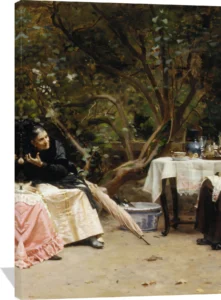
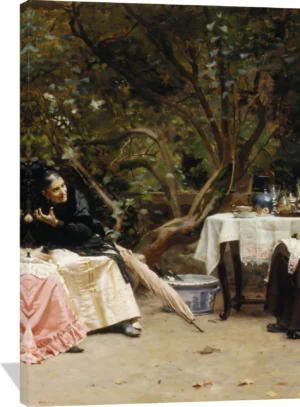
Vibert worked in a polished academic style distinguished by precise draftsmanship, luminous color, and theatrical composition. His paintings are instantly recognizable for their narrative clarity and finely observed details, reflecting both his training at the École des Beaux‑Arts and his lifelong dedication to craftsmanship. His command of expression, gesture, and setting gave his scenes a lively, almost stage‑like presence, underscoring his skill as a visual storyteller.
Subjects and Themes
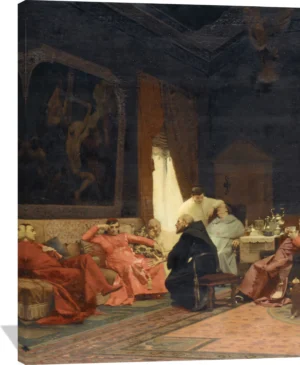
Best known for his satirical depictions of cardinals and clergy, Vibert used humor to illuminate human vanity, ambition, and folly. These works, while playful, carried a sharper edge that made them culturally resonant in his time and enduringly appealing today. He also produced elegant Orientalist scenes and domestic interiors, each rendered with careful attention to costume, décor, and atmosphere.
Legacy and Significance
Vibert’s work exemplifies the refined narrative painting valued in nineteenth‑century France, yet his keen wit and distinctive satirical voice set him apart from many of his academic contemporaries. His paintings remain admired for their technical finesse, engaging storytelling, and ability to capture the nuances of social life with both charm and bite. Today, collectors value Vibert for his unique blend of artistry and commentary an approach that makes his work both visually captivating and culturally rich.