Artistic Style
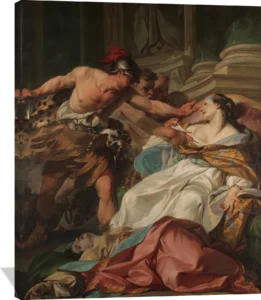
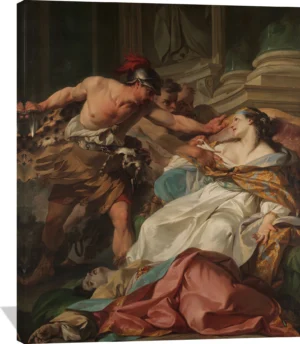
Pierre’s work is characterized by fluid draftsmanship, luminous color, and a delicate sense of movement. His paintings often balance decorative charm with structured classical influence, reflecting the shifting tastes of eighteenth‑century France as the ornate Rococo gave way to a more sober aesthetic. His controlled brushwork and harmonious palettes became hallmarks of his mature style.
Subjects and Themes
Pierre frequently painted mythological and allegorical scenes, creating compositions that blended idealized figures with theatrical staging. These subjects allowed him to display his talent for expressive anatomy, refined detail, and atmospheric softness. He also contributed extensively to large-scale decorative programs, producing ceiling paintings and elaborate schemes for royal and ecclesiastical settings.
Legacy and Significance
Throughout his career, Pierre held influential positions within the French art establishment, shaping the academic standards of his era. His work served as a bridge between Rococo elegance and emerging Neoclassical discipline, making him a significant figure in the visual culture of pre-Revolutionary France. Today, he is remembered for his elegant narrative vision and his ability to unite decorative beauty with classical structure, qualities that give his artworks a lasting appeal.