Artistic Style
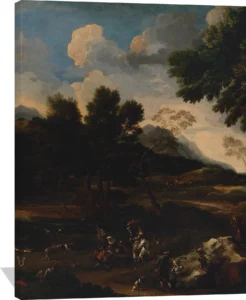
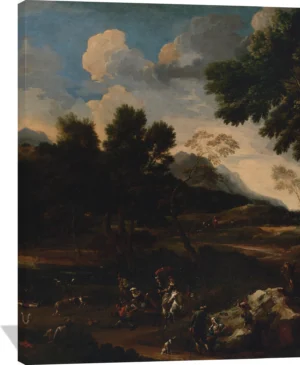
Miel’s work is defined by a harmonious fusion of Flemish detail and the lively naturalism of the Roman Baroque. His scenes often feature luminous color, elegant compositions, and a keen observational clarity that reflects his Northern training while embracing the dynamism of his adopted Italian milieu.
Subjects and Contributions
Early in his career, Miel was closely associated with the Bamboccianti, a circle of artists depicting everyday Roman life. His images of street performers, travelers, and market scenes are notable for their humanity and nuanced storytelling. Over time, he shifted toward courtly and historical themes, creating large‑scale commissions that showcased his growing sophistication in narrative composition.
A versatile artist, he excelled in both small cabinet pictures and monumental fresco cycles, demonstrating a rare ability to move between intimate realism and grand, theatrical imagery. His collaborations and later work in Turin highlight his role in shaping the visual culture of the Savoy court, where he contributed to projects that elevated his reputation as a master of refined Baroque narrative.
Cultural Significance
Miel’s legacy lies in his capacity to bridge cultures. As one of the first Northern painters admitted to the prestigious Accademia di San Luca in Rome, he stands as a key figure in the artistic exchange between Flanders and Italy. His art captures both the charm of everyday life and the dignity of historical storytelling, making his oeuvre a compelling embodiment of seventeenth‑century European cosmopolitanism.