Artistic Style
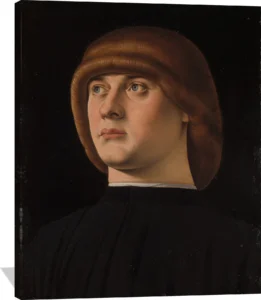
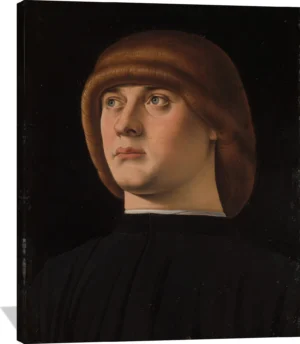
Jacometto’s work is distinguished by its exceptional precision, jewel-like surfaces, and delicate modeling of the human face. His technique reflects the transition from late Gothic refinement to the emerging Venetian Renaissance, favoring subtle lighting and controlled detail over dramatic gestures. Miniature-like clarity and harmonious color remain hallmarks of his paintings.
Notable Contributions
Renowned for his small-scale portraits, Jacometto elevated the genre through careful observation and a remarkable sensitivity to individual character. His panels often achieve a quiet intensity, presenting sitters with an almost meditative stillness. Though not prolific, his oeuvre demonstrates a mastery that influenced later Venetian portraitists.
Subjects and Themes
Jacometto focused primarily on portraits of the Venetian elite, capturing them in half-length or bust-length compositions. His subjects appear poised and contemplative, rendered with attentive detail to their attire and expression. He also produced devotional works marked by the same refinement, offering intimate interpretations of sacred themes.
Cultural Significance
Working in a city poised to become one of Europe’s great artistic centers, Jacometto helped shape the early foundations of Venetian portraiture. His emphasis on clarity, restraint, and exquisite finish set him apart from his contemporaries and contributed to Venice’s reputation for elegant, perceptive painting. Today, his surviving works remain admired for their understated beauty and remarkable precision.