Artistic Style
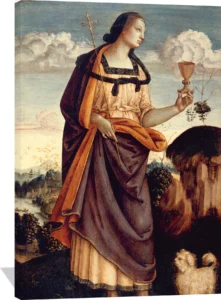
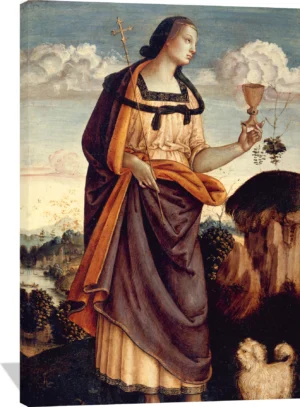
The artist’s style is distinguished by serene compositions, balanced spatial arrangements, and a gentle yet precise handling of form. Characteristic of Umbrian painting of the time, his palette favors soft tonal transitions and luminous colors that imbue figures with a quiet grace. The influence of regional masters is evident in his pursuit of harmony, clarity, and the subtle emotional resonance conveyed through calm expressions and delicate gestures.
Typical Subjects
Religious themes dominate his oeuvre, particularly depictions of the Madonna and Child, saints, and devotional scenes intended for churches and private chapels. These works often feature tender interactions and meditative atmospheres, offering viewers a contemplative experience. When painting narrative moments, he emphasizes clarity and spiritual dignity rather than dramatic tension, aligning with the Umbrian tradition of introspective storytelling.
Notable Contributions
This painter contributed to the evolution of Central Italian art by helping bridge the stylistic shift from Gothic linearity toward the more volumetric, life-like approach championed by Renaissance innovators. His attention to proportion, gentle modeling of the human form, and sensitivity to light reflect the era’s growing interest in visual coherence and naturalism. Though not widely documented, his work participates in a broader artistic movement that laid the foundation for later masters of the region.
Cultural and Historical Significance
As an Umbrian artist working around 1500, he was part of a vibrant cultural environment shaped by spiritual devotion, humanist ideas, and increasing artistic exchange across Italian city-states. His paintings stand as testaments to a pivotal moment in European art, embodying the elegance and contemplative spirit that made Umbria a significant center of early Renaissance creativity. Today, his work is appreciated for its subtle beauty, refined technique, and its contribution to the enduring legacy of Central Italian painting.