Artistic Style
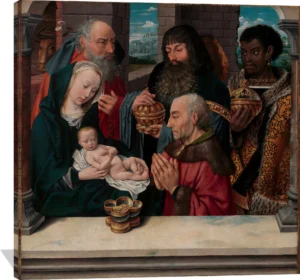
Van der Goes is recognized for his striking use of vivid color harmonies, sculptural figures, and atmospheric depth. His compositions often reveal a strong psychological dimension, marked by expressive faces and heightened dramatic contrasts. This distinctive approach made his paintings influential among contemporaries and later artists across Europe.
Notable Contributions
Among his most significant achievements is the celebrated Portinari Altarpiece, a monumental work that introduced innovative realism and emotional weight to religious subjects. Through such pieces, he helped redefine devotional art, inspiring a shift toward more intimate and believable portrayals of sacred narratives. His ability to combine meticulous detail with profound spiritual resonance remains one of his enduring contributions to early Netherlandish painting.
Subjects and Themes
Van der Goes primarily depicted religious themes, focusing on scenes of the Nativity, the life of Christ, and saints rendered with a rare combination of humility and grandeur. His figures often possess a contemplative stillness, inviting viewers into the devotional experience. The subtle observational details he integrated from delicate fabrics to luminous landscapes reflect his dedication to visual truth.
Cultural Significance
As one of the most influential artists of his time, Hugo van der Goes played a key role in shaping Northern Renaissance aesthetics. His work left a lasting impact on both Netherlandish and Italian painters, who admired his emotional depth and refined technique. Today, he is celebrated for bridging medieval tradition with emerging Renaissance humanism, offering artworks that remain both visually compelling and spiritually resonant.