Artistic Style
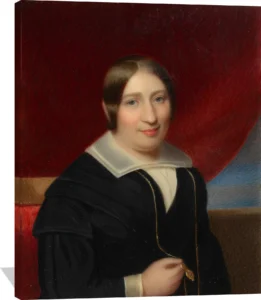
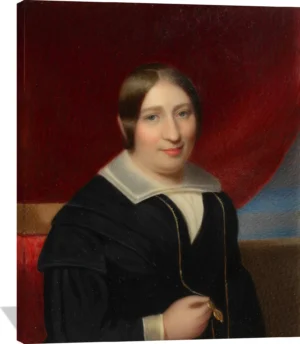
Shumway’s work is distinguished by its delicate brushwork, luminous color, and striking sense of intimacy. Executed primarily in watercolor on ivory or paper, his portraits reveal a meticulous attention to facial expression and subtle tonal shifts. He favored a polished, quietly elegant aesthetic that emphasized the sitter’s character rather than ornamental detail, a quality that made his images particularly sought after during his career.
Subjects and Themes
Shumway focused almost exclusively on portraiture, portraying individuals from a broad cross‑section of nineteenth‑century American society. His miniatures often highlight the poised self‑presentation of his subjects, capturing the refinement and aspirations of a nation in transition. Shumway’s subjects are rendered with poise and psychological nuance, resulting in portraits that feel both personal and timeless.
Notable Contributions
As photography began to transform visual culture, Shumway helped preserve and elevate the tradition of painted portrait miniatures. His approach blended classical precision with a distinctly American sensitivity, positioning him as one of the final major figures to define this art form before it declined in popularity. His ability to distill a sitter’s essence into a small, meticulously crafted format continues to be recognized as a hallmark of his work.
Cultural Significance
Shumway’s portraits serve as an evocative window into nineteenth‑century American life. Beyond their aesthetic appeal, they offer an important record of fashion, identity, and social presence during a period of cultural transformation. His artistry represents a bridge between traditional handcrafted portraiture and the emerging visual technologies of his era. Today, he is remembered for his exquisite miniaturist technique and his enduring contribution to American portrait art.