Artistic Style
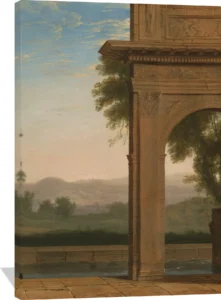
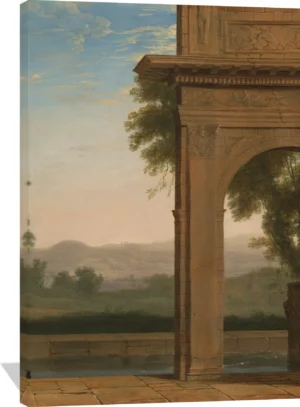
Mauperché’s work reflects the serene, ordered vision characteristic of the classical landscape. His compositions balance architectural elements, sweeping horizons, and natural forms arranged with clarity and harmony. Soft, luminous lighting and a restrained palette lend his scenes a contemplative elegance, reinforcing the poetic mood for which he became known.
Typical Subjects
He often depicted pastoral terrains, mythological settings, and wooded glades animated by travelers, shepherds, or small narrative figures. These elements remain secondary to the landscape itself, which serves as the true protagonist. Whether portraying a tranquil riverbank or an expansive mountainous view, Mauperché emphasized structure, depth, and the serene order of nature.
Notable Contributions
As part of the generation that solidified landscape painting as a respected genre in France, Mauperché played a meaningful role in shaping courtly taste. He participated in major decorative programs for royal and aristocratic patrons, contributing to an artistic environment in which the landscape became a central form of cultural expression. His works also show the subtle influence of Italianate ideals circulating in Paris, merging them with a distinctly French sensibility.
Cultural Significance
Mauperché’s landscapes embody the intellectual and aesthetic priorities of his time, reflecting a belief in nature as a site of order and contemplation. His refined handling of space and atmosphere helped establish visual conventions that influenced later French landscape painters. Collectors value his art for its balance of imagination and structure, as well as for its ability to evoke the timeless calm of the seventeenth‑century classical tradition.